Pulished on Nov. 22, 2026
The 10 ton electric forklift has been developed to meet the needs of those industries which require a large amount of weight to be moved but do not want to use a diesel engine. These forklifts typically have a nominal load capacity of 10,000kg. As such they can typically be used within manufacturing of machinery, steel production facilities, industrial warehouse settings as well as many other areas of material handling where heavy loads need to be transported.
For companies deciding between using an electric or diesel-powered forklift, the ability to lift a certain amount of weight is not the only factor. Companies must also take into account other variables such as battery performance, load center, what type of environment the machine will be operated in and the cost of maintaining the equipment over time.
How 10 ton electric forklifts function, where they are utilized, and what overseas purchasers need to contemplate prior to buying.
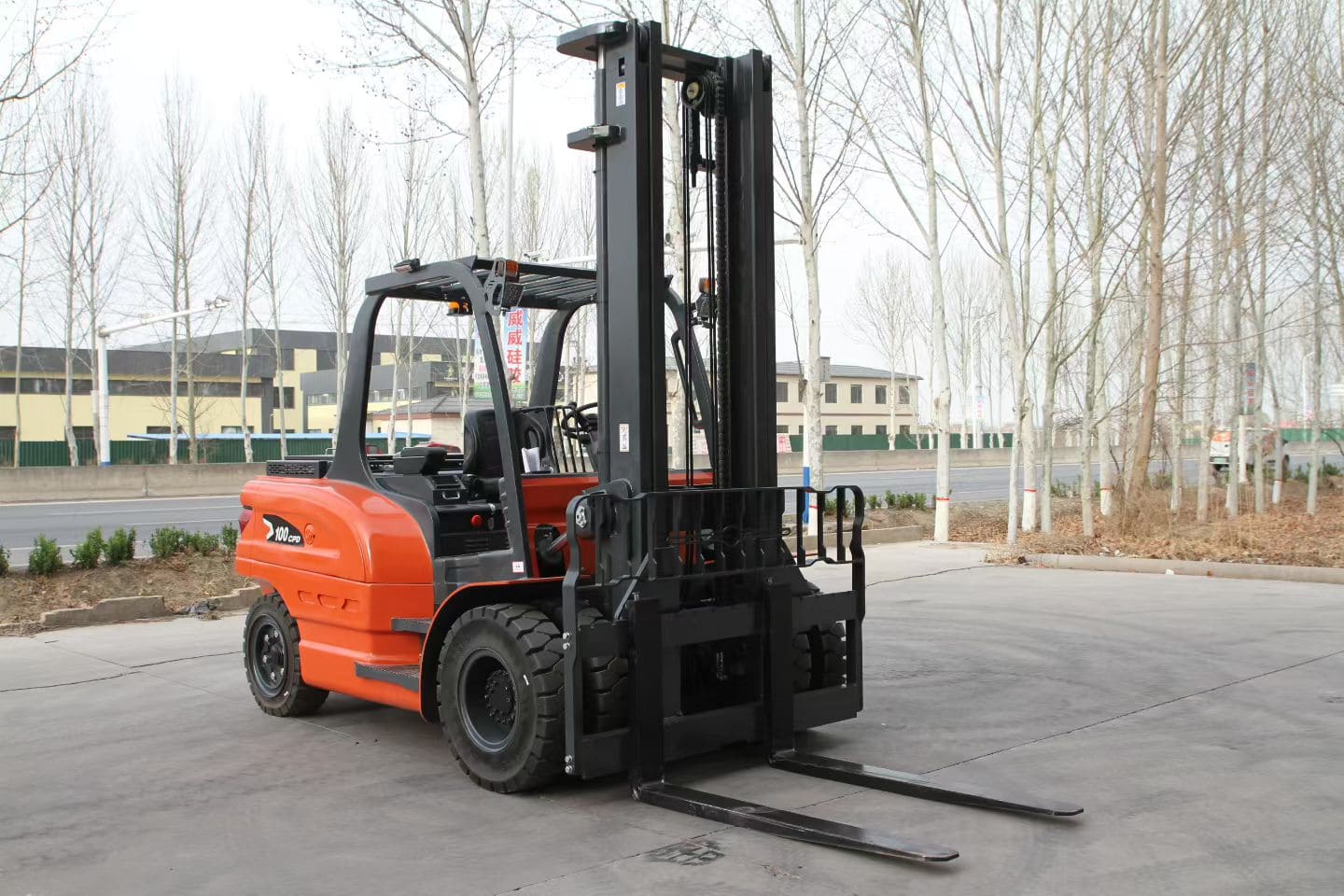
The 10-ton electric forklift is an electric-powered counterbalance forklift that has a rated load capacity of 10,000 kilograms under specific operating conditions.
Smaller versions of warehouse forklifts differ from these larger models that are designed to handle heavy industrial loads. These large models are capable of moving heavy parts of industrial machinery, steel products, manufacturing equipment, industrial molds, and construction materials.
The rated capacity of 10,000 kg does not necessarily imply that the forklift will be able to safely pick up any item with a weight of 10 tons. A forklift's actual lifting capacity is dependent upon its load center, mast height, attachment setup and manufacturer's specification.
An example of how two loads that have the same weight can require different configurations of a forklift would be if one load was a compact 9,000 kg load and the second was a long piece of steel of the same weight. This would happen due to each load having a different center of gravity.
Buyers must always check what the actual lifting capacity is for the specific use they plan on putting it to.
Industrial settings requiring higher-capacity lifting than traditional warehouse forklifts can accommodate use heavy duty electric forklifts.
Machinery Manufacturing
In many instances heavy machinery producers transport substantial parts of their products from one area to another in a production facility such as assembly stations, storage locations or production lines. To accomplish this task, an electric forklift with a load rating of 10 tons has the ability to handle the required lifting force without generating harmful tailpipe emissions inside the plant.
Steel and Metal Processing
Heavy-duty industrial materials, steel plates, and custom-made metal products require heavy-duty forklifts that are built to handle large loads.
The manufacturer should also take into account the size of the load being carried as well as the overall weight.
Industrial Mold Handling
The weight of large industrial molds is frequently several tons, and the positioning of these molds is often critical to the production process. A combination of electric forklifts and smooth-acting hydraulic controls will allow an operator to manage such weights when producing or maintaining products.
Paper and Building Materials
High capacity forklifts are used to handle large paper rolls, packaged building materials, and manufactured goods.
Attachments (such as paper roll clamps and fork positioners) that are specialized for your specific application should be evaluated prior to purchase or use, as well as the potential impact of their weight on the overall lifting capacity of your forklift.
Electric powered forklifts provide many benefits for industrial environments, especially within the confines of factories and other indoor manufacturing areas.
One key advantage of an electric powered forklift is that there are no harmful tail pipe emissions when in use. In addition, electric powered forklifts usually operate with significantly reduced noise levels compared to equivalent diesel models.
Another thing to keep in mind is the maintenance required for the equipment. Electric forklifts don't have to go through the process of getting diesel engine oil changes, nor do they need to undergo any other type of engine-related fuel system maintenance. However, electric forklifts still require routine maintenance on the various components that make up the truck such as the hydraulics, electrical and mechanical systems.
Electric forklifts may be a good option for companies that are located close to their employees, manufacturing equipment, and completed goods.
However, diesel-powered lift trucks will still have value in remote areas and other applications that do not provide easy access to a source of power to recharge batteries.
The most appropriate option is determined by the number of hours you will be working, the amount of weight/load you will need to move/carry, whether there is a place to charge your device/vehicle, and how often/well it functions under extreme temperatures or other harsh environments.
When you purchase an electric forklift with high capacity, choosing the right battery is one of the most critical choices.
A ten-ton lithium-battery powered electric forklift provides useful benefits for applications where frequent operation is required, and scheduled downtime for battery recharging is provided.
Opportunity charging with lithium batteries allows the operator to charge at times when it is convenient (e.g., breaks) instead of just relying on overnight charging.
Actual working time is based upon the amount of power provided by the battery, along with how much work the lift truck performs.
Heavy loads carried continuously by a machine will usually require more energy than those moved occasionally and for shorter periods.
Buyers must take into account how many hours per day they will use their equipment, the typical amount of weight being carried, how far they will travel with the equipment, how often the equipment is used for lifting, and what opportunities there are to recharge the battery.
The battery management system (BMS) is also a very critical component. When a BMS is correctly installed it will monitor the operational status of the battery and support its protective functions.
EIOUU offers both types of batteries, lithium-ion and lead-acid, for all compatible electric forklift models. It is recommended to check with your dealer regarding the availability and specific features of the battery that you have chosen.
Lifting height has a direct relationship with forklift selection.
A forklift that has an assigned maximum rating of 10,000 kg for a specific load center, could potentially be limited by the use of a taller mast, or a different type of load configuration.
A customer using an 8,500 kg industrial component at a height of 4,500 mm cannot assume that all 10 ton forklifts will be able to perform this operation.
The manufacturer will need to assess the required lift height, load center, mast configuration and all available attachments.
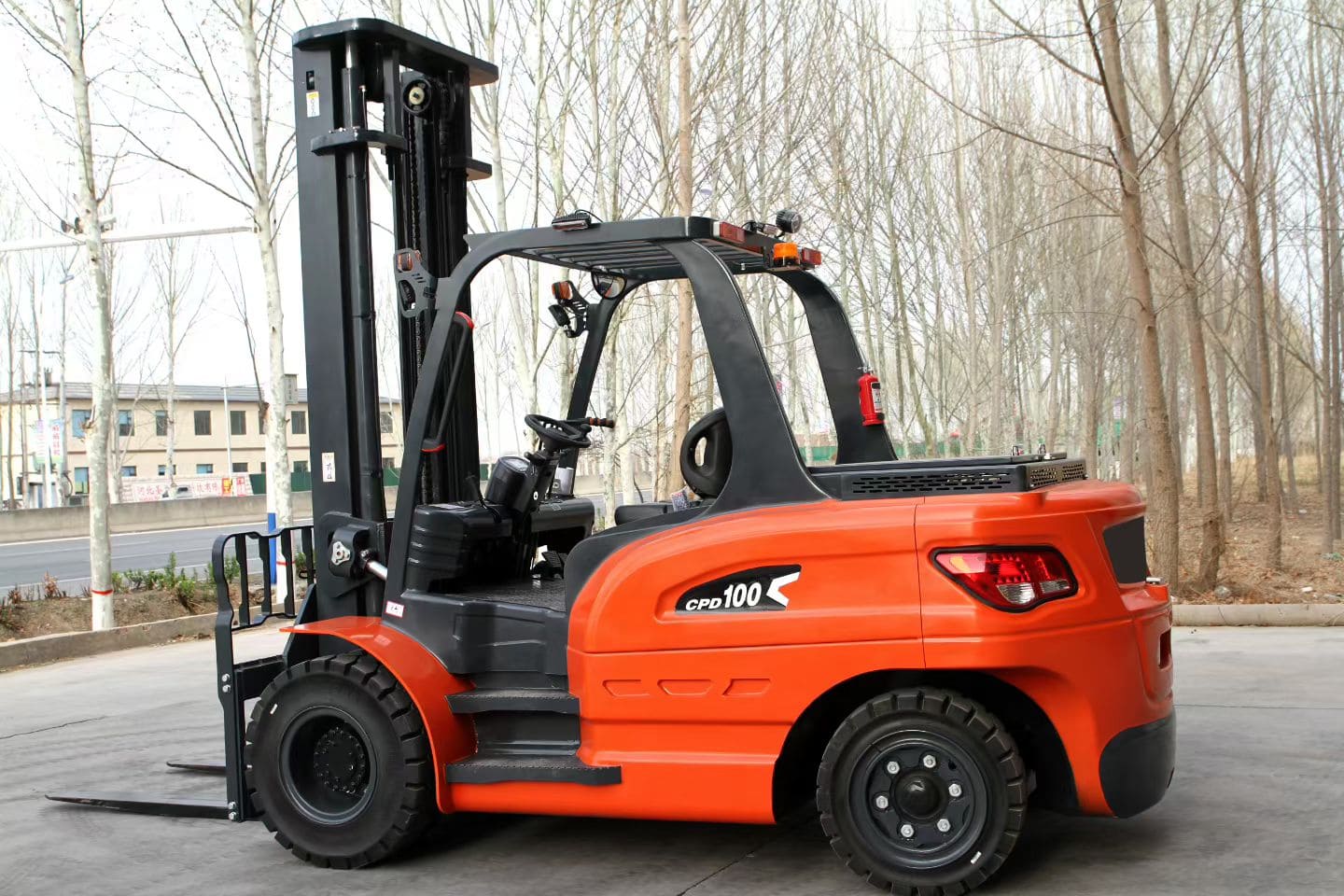
The EIOUU HE-CPD100 is an electric forklift that has a capacity of 10,000 kg and has a standard specified lift height of 3,000 mm, but can be customized to different lifting capacities.
The actual residual lifting capacity should be verified based on the actual configuration and the manufacturer's load charts.
Large-capacity forklifts are used when there is material which cannot be moved by standard pallet forks.
The operator can use fork positioners to change the distance between each fork based on what types of load they are lifting. Industrial attachments such as paper roll clamps can provide specific application support if the attachment is compatible with the forklift.
When you initially purchase your forklift you will need to consider what attachments you may wish to use. The reason for this is that each time you add an attachment to your forklift, its overall lifting capabilities change.
For distributors outside the U.S., there are other ways to customize your forklift. These include color of your forklift, branding of your company, configuration of the mast, choice of battery option and size of the forks.
The success of an OEM project is determined by how well it meets the operational needs of the user, not just its visual appeal.
Buying an electric forklift that has the capacity to lift 10 tons will require more preparation than purchasing a typical warehouse truck.
The first thing that buyers should do is verify the highest amount of weight that can be carried by the forklift, its size, and where the center of gravity of the load is located. This will allow the maker of the forklift to decide if the forklift they have chosen has enough capacity to handle the jobs.
Operating environments are also very important. There are many factors that determine what types of machinery will work best on different factory floors, on the outside of buildings, at various grades, and with the amount of space available to make turns.
Before receiving your product, you should check to see if your current battery charging station is compatible with the charger you chose. You must verify that the electricity provided at your location is adequate to power the charger you purchased.
After sales service is an additional factor to consider when choosing a manufacturer. Particularly for international distributors, the access to replacement parts, technical documentation, warranties, and replacement battery service are all factors which may affect the total cost of ownership of a product over time.
When possible, it is recommended that buyers obtain actual load-handling video(s) and/or factory test data for evaluation purposes, as opposed to simply relying on product photographs.
EIOUU sells electric-powered forklifts and other materials handling products to international distributors, wholesalers, importers, and industrial users.
The HE-CPD100 is part of our line of heavy-duty electric forklifts and can lift up to 10,000 kg.
In accordance with the project needs and technical possibilities, customers may have discussions about their battery configuration, mast type, fork size, attachments, and custom branding.
We are open to working with distributors to create their brand of equipment through OEM/ODM partnerships.
Our process for large-scale forklift projects begins with assessing a customer's operational needs prior to determining the exact design of their equipment.
This will help buyers pick equipment that is appropriate for the unique way they handle materials.
A 10-ton electric forklift has a listed nominal rated lifting capacity of 10,000 kg when operated within certain parameters. However, the actual lifting capacity will vary depending on such variables as load center, lifting height, mast setup and attachments.
Yes, you can find lithium battery setups for your high-capacity electric forklifts. You will want to select a battery setup that fits with how much work you plan on doing with each forklift.
Yes, as long as your operating environment and the type of electric forklift you purchase are appropriate. Electric forklifts emit zero tailpipe emissions and typically run much quieter than diesel forklifts.
Yes, EIOUU can provide either private label products (OEM) or manufactured products based on customer specifications (ODM) that incorporate specific features requested by the customer. Both types of production are possible as long as they meet the technical requirements of the company.
An electric forklift with a capacity of 10 tons may be a viable option for those involved in the industrial sector who have to move around items that are extremely heavy, big machine parts, or other types of materials which require specialized handling.
Actual lifting capability, battery life/performance, the environment in which the equipment is operated, and the level of long term customer support are the primary considerations when making a purchase.
EIOUU provides industrial buyers and distributors of 10-ton electric forklifts, heavy-duty electric forklift solutions with custom configuration possibilities, and the opportunity to work as an OEM or ODM partner.
Give EIOUU information about what you need to lift, how high you want to lift it, and the type of environment you will be working in so they can help you select the right forklift configuration.
 Previous: None
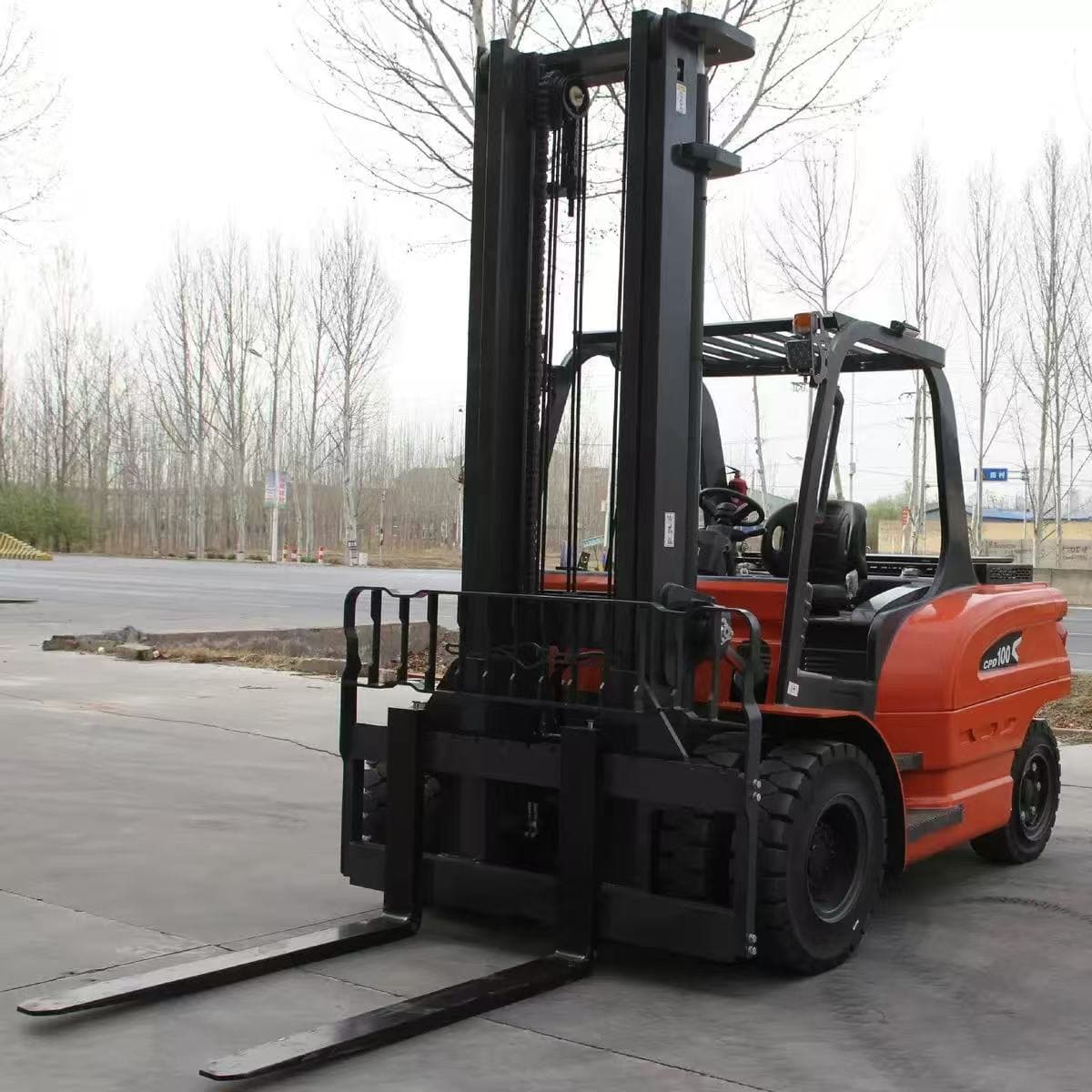
10 Ton Electric Forklift: Applications, Benefits & Buying Guide
Published on Nov. 22, 2026
Privacy Policy | EIOUU Forklift
Published on Nov. 21, 2026


314, Building 3, No. 12 Haitai Development 2nd Road, Binhai High-tech Zone, Xiqing District, Tianjin, China


Copyright © Tianjin HRX Technology Co., Ltd. All Rights Reserved. Sitemap
Home ProductsAbout usFor DistributorsOEM/ODMNewsContact Us