Pulished on Sep. 21, 2026
Meta Title: Electric Forklift Buying Guide for European Distributors
Meta Description: A practical electric forklift buying guide for European distributors. Learn what to check before importing, from capacity and lithium batteries to CE documentation, spare parts, OEM options and supplier support.
Buying an electric forklift for your own warehouse is one thing. Buying forklifts for resale is quite another.
A warehouse normally knows what it needs: a certain load capacity, lift height and working time. A distributor has to think about all of that, but also about what happens after the machines arrive. Will the specifications suit local customers? Are spare parts easy to obtain? Can the supplier provide the right documentation? What happens when a customer needs technical support six months later?
These questions matter even more when the forklifts are being imported from outside Europe.
For European forklift distributors, a low factory price can certainly make a quotation attractive. But price alone rarely determines whether a product will be profitable over the next three or five years.
A good purchasing decision starts with the product, but it does not end there.
This guide covers the main points European distributors should check when sourcing electric forklifts for their local market.
It is easy to receive a catalogue with 20 forklift models and start comparing prices.
That is usually the wrong place to begin.
First look at the customers you already serve.
Suppliers for small warehouses usually get plenty of requests for compact 1.5 ton and 2 ton electric forklifts. Those working with manufacturing facilities tend to stock more 2.5 ton, 3 ton and 3.5 ton models. Buyers handling steel, paper, machinery or building materials might need heavier load capacity plus custom attachments.
The working environment matters as well.
Ask:
l What loads do customers normally handle?
l What are the most common pallet sizes?
l How high do they lift?
l Are the forklifts mainly used indoors?
l How wide are the aisles?
l Is multi-shift operation common?
l Do customers prefer lithium batteries?
l Which attachments are frequently requested?
Once those questions are clear, the supplier list becomes much easier to evaluate.
A distributor does not need every model. A well-selected range of five useful models is often better than a catalogue of twenty machines that rarely sell.
For general European warehouse applications, capacities around 1.5 to 3.5 tons cover a large part of everyday material handling.
A 1.5 or 2 ton electric forklift can work well for standard pallets, warehouses, logistics and lighter manufacturing.
A 2.5 or 3 ton model gives more flexibility where pallet weights vary or customers handle heavier goods.
But distributors should be careful about selling capacity as a simple number.
A forklift marked “2,000 kg” does not necessarily lift 2,000 kg under every condition.
Actual capacity can be affected by:
l Load center
l Mast type
l Lift height
l Fork length
l Attachment weight
l Load dimensions
This becomes especially important when a customer asks for a side shift, fork positioner, carton clamp, paper roll clamp or another attachment.
Before confirming an unusual application, send the load information to the manufacturer and check the remaining capacity.
That small step can prevent a much bigger problem after delivery.
European warehouses are not all large distribution centers with wide aisles.
Many customers operate in older buildings, smaller industrial units or storage areas where every 100 mm matters.
For these buyers, overall forklift dimensions can be as important as lifting capacity.
When comparing electric forklifts, check:
overall length, overall width, wheelbase, turning radius and required aisle width.
A compact design can make a forklift easier to position around racks, loading areas and production lines.
This is also where distributors should avoid comparing models only from photographs.
Two 2 ton electric forklifts may look almost identical online but behave quite differently inside a narrow warehouse.
Always ask for a complete specification sheet.
Battery choice is now one of the most common discussions in electric forklift purchasing.
Lead-acid remains familiar to many customers and normally offers a lower initial purchase cost.
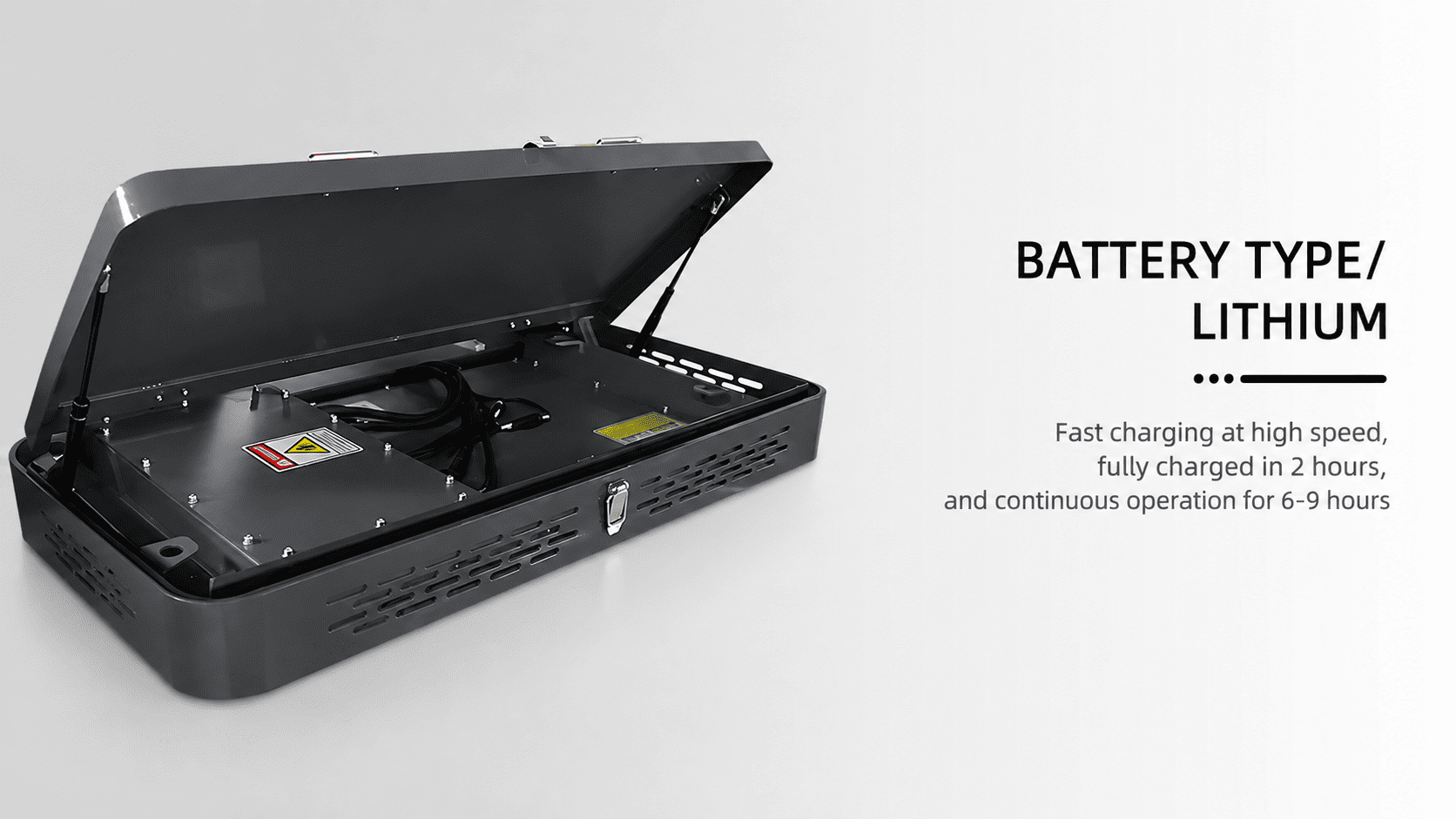
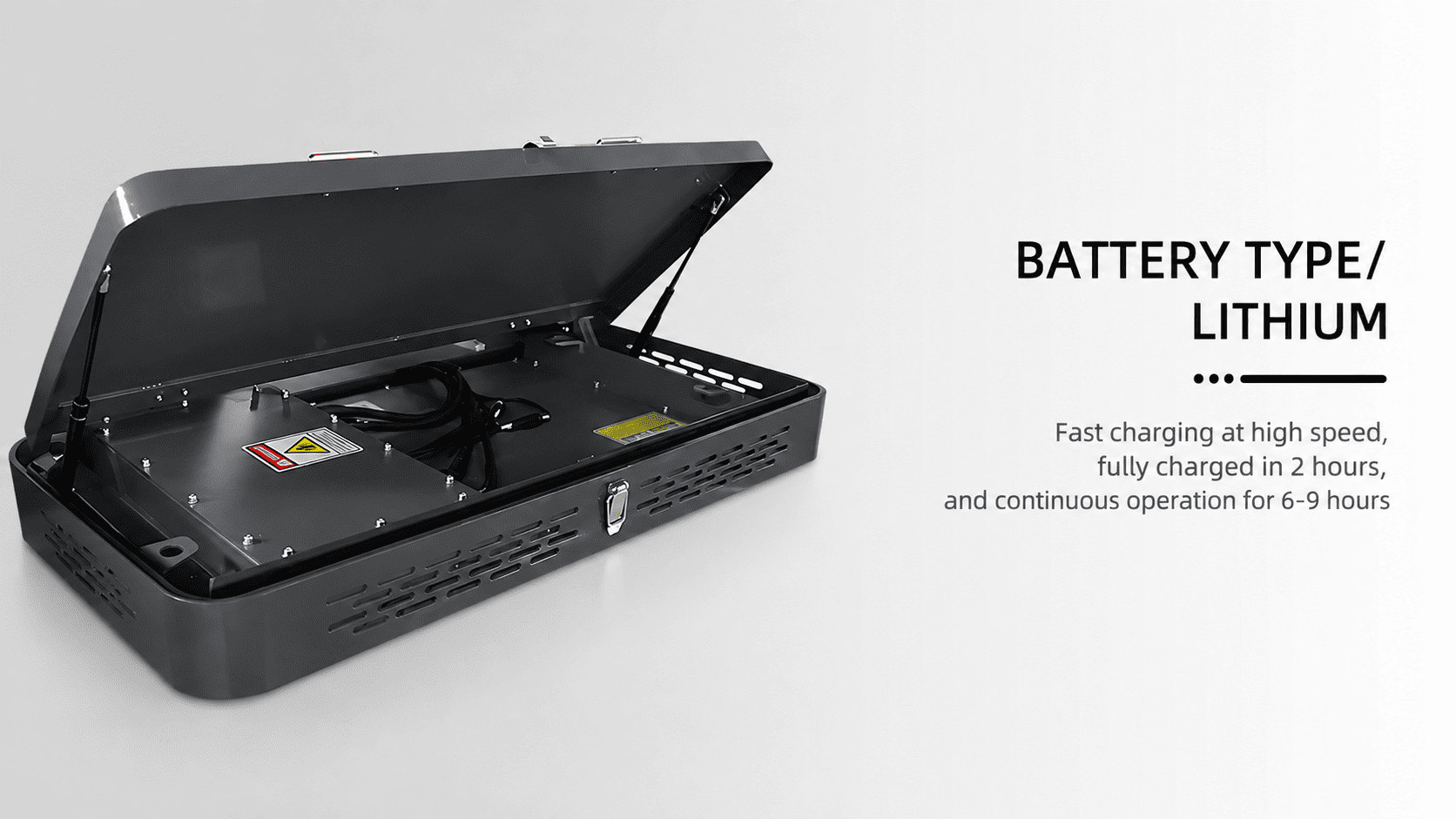
Lithium, however, has become increasingly attractive for businesses that want fast charging, less routine maintenance and better availability during long working days.
There is no reason for a distributor to treat this as an argument where one technology must always win.
The better choice depends on the customer.
A forklift used for two or three hours per day may not need the same battery solution as a machine operating across two shifts.
For lithium models, ask the manufacturer about:
l Battery capacity
l Battery chemistry
l BMS
l Charger specification
l Charging time
l Battery warranty
l Replacement availability
Communication between the battery and forklift
The last point is easy to overlook.
A lithium battery is not simply a box that supplies electricity. The battery, charger, controller and BMS should work correctly as a system.
A large Ah number looks good in a brochure, but it does not tell the whole story.
Actual working time depends on load weight, travel distance, lifting frequency, gradients, driving habits and the efficiency of the forklift itself.
For example, a truck constantly lifting heavy pallets to a high rack will consume energy differently from the same truck moving lighter pallets over short distances.
This is why distributors should describe the customer's duty cycle when discussing battery configuration.
Instead of asking:
“What is your biggest battery?”
a more useful question is:
“The customer operates around seven hours per day with frequent lifting. Which battery configuration would you recommend?”
That gives the factory something meaningful to work with.
European customers expect electric forklifts to be productive, but safety cannot be treated as an optional extra.
When evaluating a model, look at how the complete machine has been designed.
Depending on the model and configuration, useful features can include operator-presence protection, controlled cargo lowering, braking assistance, clear instrumentation, LED lighting and protection of electrical components.
The mechanical side matters just as much.
Axles, mast construction, hydraulic cylinders, overhead guards, braking systems and wiring quality all influence how a forklift performs after months of daily use.
A specification sheet tells you what is fitted.
A detailed factory inspection tells you how it is fitted.
For a distributor placing repeat orders, both matter.
European distributors need to cover compliance early in purchasing talks, rather than waiting until container shipment to ask for documents.
Confirm with your supplier which paperwork comes with your selected forklift model and configuration.
Never assume documentation for one model automatically applies to all variants with different capacities, masts, attachments or custom changes.
When importing equipment into the EU or other European regions, verify your country-specific compliance duties for the product.
A reputable supplier will openly discuss CE paperwork and share relevant technical details before order confirmation.
Be cautious if the supplier only says “no problem” but cannot present the actual documents.
Imagine two suppliers.
Supplier A is €300 cheaper per forklift.
Supplier B provides a clear spare-parts list, identifies common wear parts, responds quickly to technical questions and can include recommended spare parts with the shipment.
Which one is actually cheaper after two years?
For a distributor, probably not automatically Supplier A.
End customers normally contact the local dealer first when something goes wrong. They do not care that the forklift was manufactured thousands of kilometers away.
That makes parts support a commercial issue, not just a technical issue.
Before building a long-term relationship with an electric forklift manufacturer, ask about availability of items such as:
l Controllers
l Sensors
l Switches
l Hydraulic seals
l Brake components
l Wheels and tires
l Chargers
l Electrical components
l Mast wear parts
l Battery-related components
It is also useful to order a small package of common service parts with the first container.
The cost is usually modest compared with waiting for one small component when a customer's forklift is already out of service.
A forklift is assembled from many systems.
When comparing suppliers, find out what is manufactured in-house and what comes from external component manufacturers.
Pay particular attention to the drive system, controller, battery, charger, hydraulic components, mast, axle and electrical system.
This does not mean every component must carry an expensive international brand.
It means the distributor should know what is inside the machine.
That information becomes valuable later when technicians need to diagnose a fault or order replacement parts.
A forklift that is easy to service can be more valuable to a dealer than a slightly cheaper machine with unclear components.
If possible, do not evaluate a forklift only while it is parked.
Drive it.
Lift a load.
Reverse.
Turn in a confined area.
Test the brakes.
Look at mast movement.
Listen for unusual noise.
Check visibility through the mast.
Try the controls repeatedly.
Small details become obvious when the forklift is moving.
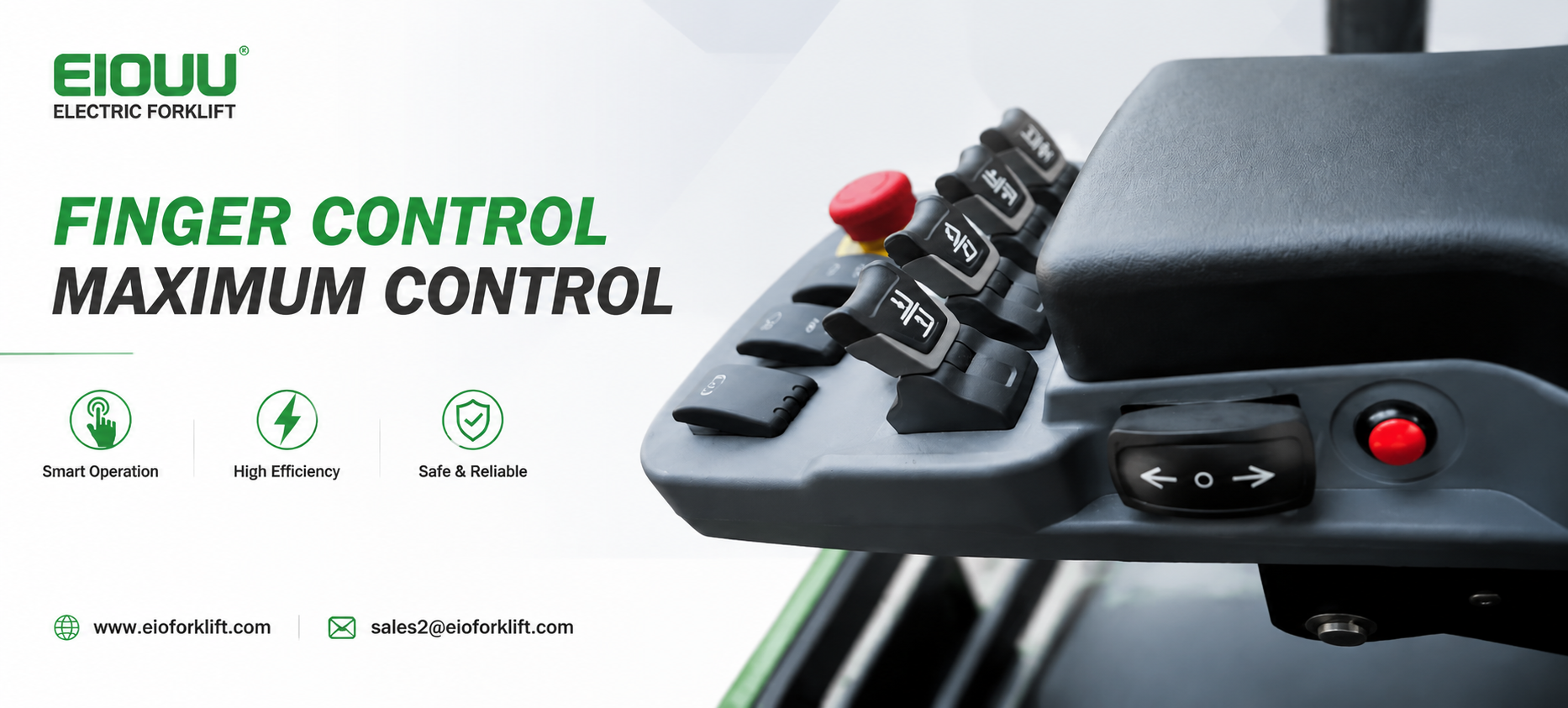
For example, fingertip controls can make repeated lifting and hydraulic operations more convenient because the operator does not need to make large lever movements. But control layout should still feel natural and predictable.
A distributor should think about the person who will sit in the truck for several hours, not only the purchasing manager looking at the specification sheet.
“Europe” is not one single forklift market.
A compact warehouse truck sold to a customer in the Netherlands may have a very different working life from a forklift used in a timber business in Poland or an industrial customer in southern Europe.
Temperature, warehouse design, floor conditions, working hours and customer expectations vary.
Dealers should therefore discuss local conditions with the manufacturer.
This is particularly important for:
l Battery configuration
l Tire selection
l Outdoor use
l Cold environments
l Slopes
l Long travel distances
l High lift applications
A standard configuration may cover most customers, but not every customer.
For many European distributors, private branding is part of the business model.
A logo on the mast or counterweight is the visible part, but good OEM & ODM forklift cooperation goes further.
Depending on order volume and technical feasibility, distributors may need customized:
l Branding
l Body labels
l Colors
l Battery configurations
l Mast options
l Fork lengths
l Tires
l Attachments
l Manuals
l Packaging
If you plan to build your own forklift brand, discuss these requirements early.
Changing a sticker is easy.
Building a consistent product range that customers recognize and technicians can support requires more planning.
Freight is a significant part of the landed cost of imported forklifts.
For this reason, container loading efficiency should be considered before the order is finalized.
Ask the supplier:
l How many units fit in a 20GP or 40HQ container?
l Are masts removed or installed during shipment?
l How are forklifts secured?
l How are batteries handled during transport?
l What protection is used against movement and damage?
l Can different models be mixed in one container?
For distributors testing a new supplier, a mixed-model container can sometimes make more sense than ordering a large quantity of one capacity.
It allows the dealer to test demand while reducing inventory risk.
A low factory quotation is attractive, but the number that matters to a distributor is the cost of getting a sellable forklift into stock.
That may include:
product price + options + inland transport + export charges + ocean freight + insurance + import costs + local transport + preparation + spare parts.
Then consider the costs that are harder to put into the first spreadsheet:
warranty work, technical support, downtime and parts availability.
A €200 saving at the factory can disappear very quickly if the forklift needs an urgent component that takes weeks to arrive.
For repeat B2B purchasing, consistency is usually worth more than winning every order on the lowest unit price.
A supplier can have a professional website, attractive factory photographs and a very competitive quotation.
None of those tells you exactly what it will be like to work together after the sale.
For a new supplier relationship, a trial order is often the sensible approach.
Use it to evaluate:
Product quality
Assembly consistency
Packaging
Documentation
Delivery time
Communication
Spare parts
Technical response
Customer feedback
If the first machines perform well, increasing the next order is much easier.
A long-term distributor relationship should be built on repeatable quality, not promises made before the deposit.
Before placing an order, send a clear requirement sheet.
Include the required capacity, lift height, mast type, battery preference, working hours, tire type, fork dimensions and attachments.
Then ask about documentation, warranty, spare parts, lead time and customization.
You should also ask what information the manufacturer needs from you.
This is surprisingly useful.
An experienced supplier will normally ask questions about your application instead of immediately sending the same quotation to every customer.
If you request a 2 ton forklift with an unusual attachment and the supplier never asks about the load dimensions or load center, that is not necessarily a good sign.
For European distributors, the best electric forklift supplier is rarely the factory with the lowest price tag.
A strong partner delivers consistent product quality, transparent technical data, spare parts support, timely issue response, and configurable setups tailored to your local market.
At EIOUU, we supply electric material handling equipment to global B2B clients: forklift dealers, wholesalers, importers and industrial purchasers.
Our electric forklift portfolio spans multiple load capacities and use cases, with customizable options based on model and project needs.
We work with distributors on OEM & ODM projects, covering branding, battery setups, masts, forks, tires, attachments and other localized requirements.
We know distributors need more than just forklifts on delivery. Stable product quality, clear technical communication and spare parts after-sales support matter greatly if you sell under your own brand and build long-term local customer loyalty.
If you are sourcing electric forklifts for the European market, start with four things:
your customers, your applications, your local requirements and your after-sales capability.
Then choose the machine.
A good 2 ton forklift with the right battery, dimensions and support can be a better product for your business than a cheaper machine with a longer specification list.
The same principle applies to the supplier.
Do not judge a factory only by what it can offer before the order. Pay attention to what it can support after the forklift has been working for a year.
That is usually where the difference between a supplier and a long-term manufacturing partner becomes clear.
No single capacity fits all European markets. 1.5 ton, 2 ton, 2.5 ton, 3 ton and 3.5 ton electric forklifts cover most regular warehouse and industrial tasks. Your target customer group determines the best product lineup.
Lithium electric forklifts work well for clients with long operating hours, opportunity charging needs, or goals to cut routine battery maintenance. Lead-acid remains a viable option for buyers prioritizing low upfront cost and light-duty use.
Verify forklift specs, load capacity, battery and charger, compliance documents, spare parts supply, warranty, shipping plans and supplier technical support prior to ordering.
Depending on the manufacturer, model, quantity and technical requirements, OEM and ODM options may include branding, colors, battery configurations, masts, forks, tires, attachments, labels and manuals.
Sourcing straight from the factory benefits distributors, especially for bulk orders or OEM requests. Still, assess quality, paperwork, communication, spare parts and after-sales service instead of deciding purely on price.
First confirm quotes use matching specifications: capacity, mast, battery, charger, tires, forks, attachments, warranty and accessories. Then compare landed cost and long-term support, not just FOB unit prices.
Meta Title: Electric Forklift Buying Guide for European Distributors
Meta Description: A practical electric forklift buying guide for European distributors. Learn what to check before importing, from capacity and lithium batteries to CE documentation, spare parts, OEM options and supplier support.
Buying an electric forklift for your own warehouse is one thing. Buying forklifts for resale is quite another.
A warehouse normally knows what it needs: a certain load capacity, lift height and working time. A distributor has to think about all of that, but also about what happens after the machines arrive. Will the specifications suit local customers? Are spare parts easy to obtain? Can the supplier provide the right documentation? What happens when a customer needs technical support six months later?
These questions matter even more when the forklifts are being imported from outside Europe.
For European forklift distributors, a low factory price can certainly make a quotation attractive. But price alone rarely determines whether a product will be profitable over the next three or five years.
A good purchasing decision starts with the product, but it does not end there.
This guide covers the main points European distributors should check when sourcing electric forklifts for their local market.
It is easy to receive a catalogue with 20 forklift models and start comparing prices.
That is usually the wrong place to begin.
First look at the customers you already serve.
Suppliers for small warehouses usually get plenty of requests for compact 1.5 ton and 2 ton electric forklifts. Those working with manufacturing facilities tend to stock more 2.5 ton, 3 ton and 3.5 ton models. Buyers handling steel, paper, machinery or building materials might need heavier load capacity plus custom attachments.
The working environment matters as well.
Ask:
l What loads do customers normally handle?
l What are the most common pallet sizes?
l How high do they lift?
l Are the forklifts mainly used indoors?
l How wide are the aisles?
l Is multi-shift operation common?
l Do customers prefer lithium batteries?
l Which attachments are frequently requested?
Once those questions are clear, the supplier list becomes much easier to evaluate.
A distributor does not need every model. A well-selected range of five useful models is often better than a catalogue of twenty machines that rarely sell.
For general European warehouse applications, capacities around 1.5 to 3.5 tons cover a large part of everyday material handling.
A 1.5 or 2 ton electric forklift can work well for standard pallets, warehouses, logistics and lighter manufacturing.
A 2.5 or 3 ton model gives more flexibility where pallet weights vary or customers handle heavier goods.
But distributors should be careful about selling capacity as a simple number.
A forklift marked “2,000 kg” does not necessarily lift 2,000 kg under every condition.
Actual capacity can be affected by:
l Load center
l Mast type
l Lift height
l Fork length
l Attachment weight
l Load dimensions
This becomes especially important when a customer asks for a side shift, fork positioner, carton clamp, paper roll clamp or another attachment.
Before confirming an unusual application, send the load information to the manufacturer and check the remaining capacity.
That small step can prevent a much bigger problem after delivery.
European warehouses are not all large distribution centers with wide aisles.
Many customers operate in older buildings, smaller industrial units or storage areas where every 100 mm matters.
For these buyers, overall forklift dimensions can be as important as lifting capacity.
When comparing electric forklifts, check:
overall length, overall width, wheelbase, turning radius and required aisle width.
A compact design can make a forklift easier to position around racks, loading areas and production lines.
This is also where distributors should avoid comparing models only from photographs.
Two 2 ton electric forklifts may look almost identical online but behave quite differently inside a narrow warehouse.
Always ask for a complete specification sheet.
Battery choice is now one of the most common discussions in electric forklift purchasing.
Lead-acid remains familiar to many customers and normally offers a lower initial purchase cost.
Lithium, however, has become increasingly attractive for businesses that want fast charging, less routine maintenance and better availability during long working days.
There is no reason for a distributor to treat this as an argument where one technology must always win.
The better choice depends on the customer.
A forklift used for two or three hours per day may not need the same battery solution as a machine operating across two shifts.
For lithium models, ask the manufacturer about:
l Battery capacity
l Battery chemistry
l BMS
l Charger specification
l Charging time
l Battery warranty
l Replacement availability
Communication between the battery and forklift
The last point is easy to overlook.
A lithium battery is not simply a box that supplies electricity. The battery, charger, controller and BMS should work correctly as a system.
A large Ah number looks good in a brochure, but it does not tell the whole story.
Actual working time depends on load weight, travel distance, lifting frequency, gradients, driving habits and the efficiency of the forklift itself.
For example, a truck constantly lifting heavy pallets to a high rack will consume energy differently from the same truck moving lighter pallets over short distances.
This is why distributors should describe the customer's duty cycle when discussing battery configuration.
Instead of asking:
“What is your biggest battery?”
a more useful question is:
“The customer operates around seven hours per day with frequent lifting. Which battery configuration would you recommend?”
That gives the factory something meaningful to work with.
European customers expect electric forklifts to be productive, but safety cannot be treated as an optional extra.
When evaluating a model, look at how the complete machine has been designed.
Depending on the model and configuration, useful features can include operator-presence protection, controlled cargo lowering, braking assistance, clear instrumentation, LED lighting and protection of electrical components.
The mechanical side matters just as much.
Axles, mast construction, hydraulic cylinders, overhead guards, braking systems and wiring quality all influence how a forklift performs after months of daily use.
A specification sheet tells you what is fitted.
A detailed factory inspection tells you how it is fitted.
For a distributor placing repeat orders, both matter.
European distributors need to cover compliance early in purchasing talks, rather than waiting until container shipment to ask for documents.
Confirm with your supplier which paperwork comes with your selected forklift model and configuration.
Never assume documentation for one model automatically applies to all variants with different capacities, masts, attachments or custom changes.
When importing equipment into the EU or other European regions, verify your country-specific compliance duties for the product.
A reputable supplier will openly discuss CE paperwork and share relevant technical details before order confirmation.
Be cautious if the supplier only says “no problem” but cannot present the actual documents.
Imagine two suppliers.
Supplier A is €300 cheaper per forklift.
Supplier B provides a clear spare-parts list, identifies common wear parts, responds quickly to technical questions and can include recommended spare parts with the shipment.
Which one is actually cheaper after two years?
For a distributor, probably not automatically Supplier A.
End customers normally contact the local dealer first when something goes wrong. They do not care that the forklift was manufactured thousands of kilometers away.
That makes parts support a commercial issue, not just a technical issue.
Before building a long-term relationship with an electric forklift manufacturer, ask about availability of items such as:
l Controllers
l Sensors
l Switches
l Hydraulic seals
l Brake components
l Wheels and tires
l Chargers
l Electrical components
l Mast wear parts
l Battery-related components
It is also useful to order a small package of common service parts with the first container.
The cost is usually modest compared with waiting for one small component when a customer's forklift is already out of service.
A forklift is assembled from many systems.
When comparing suppliers, find out what is manufactured in-house and what comes from external component manufacturers.
Pay particular attention to the drive system, controller, battery, charger, hydraulic components, mast, axle and electrical system.
This does not mean every component must carry an expensive international brand.
It means the distributor should know what is inside the machine.
That information becomes valuable later when technicians need to diagnose a fault or order replacement parts.
A forklift that is easy to service can be more valuable to a dealer than a slightly cheaper machine with unclear components.
If possible, do not evaluate a forklift only while it is parked.
Drive it.
Lift a load.
Reverse.
Turn in a confined area.
Test the brakes.
Look at mast movement.
Listen for unusual noise.
Check visibility through the mast.
Try the controls repeatedly.
Small details become obvious when the forklift is moving.
For example, fingertip controls can make repeated lifting and hydraulic operations more convenient because the operator does not need to make large lever movements. But control layout should still feel natural and predictable.
A distributor should think about the person who will sit in the truck for several hours, not only the purchasing manager looking at the specification sheet.
“Europe” is not one single forklift market.
A compact warehouse truck sold to a customer in the Netherlands may have a very different working life from a forklift used in a timber business in Poland or an industrial customer in southern Europe.
Temperature, warehouse design, floor conditions, working hours and customer expectations vary.
Dealers should therefore discuss local conditions with the manufacturer.
This is particularly important for:
l Battery configuration
l Tire selection
l Outdoor use
l Cold environments
l Slopes
l Long travel distances
l High lift applications
A standard configuration may cover most customers, but not every customer.
For many European distributors, private branding is part of the business model.
A logo on the mast or counterweight is the visible part, but good OEM & ODM forklift cooperation goes further.
Depending on order volume and technical feasibility, distributors may need customized:
l Branding
l Body labels
l Colors
l Battery configurations
l Mast options
l Fork lengths
l Tires
l Attachments
l Manuals
l Packaging
If you plan to build your own forklift brand, discuss these requirements early.
Changing a sticker is easy.
Building a consistent product range that customers recognize and technicians can support requires more planning.
Freight is a significant part of the landed cost of imported forklifts.
For this reason, container loading efficiency should be considered before the order is finalized.
Ask the supplier:
l How many units fit in a 20GP or 40HQ container?
l Are masts removed or installed during shipment?
l How are forklifts secured?
l How are batteries handled during transport?
l What protection is used against movement and damage?
l Can different models be mixed in one container?
For distributors testing a new supplier, a mixed-model container can sometimes make more sense than ordering a large quantity of one capacity.
It allows the dealer to test demand while reducing inventory risk.
A low factory quotation is attractive, but the number that matters to a distributor is the cost of getting a sellable forklift into stock.
That may include:
product price + options + inland transport + export charges + ocean freight + insurance + import costs + local transport + preparation + spare parts.
Then consider the costs that are harder to put into the first spreadsheet:
warranty work, technical support, downtime and parts availability.
A €200 saving at the factory can disappear very quickly if the forklift needs an urgent component that takes weeks to arrive.
For repeat B2B purchasing, consistency is usually worth more than winning every order on the lowest unit price.
A supplier can have a professional website, attractive factory photographs and a very competitive quotation.
None of those tells you exactly what it will be like to work together after the sale.
For a new supplier relationship, a trial order is often the sensible approach.
Use it to evaluate:
Product quality
Assembly consistency
Packaging
Documentation
Delivery time
Communication
Spare parts
Technical response
Customer feedback
If the first machines perform well, increasing the next order is much easier.
A long-term distributor relationship should be built on repeatable quality, not promises made before the deposit.
Before placing an order, send a clear requirement sheet.
Include the required capacity, lift height, mast type, battery preference, working hours, tire type, fork dimensions and attachments.
Then ask about documentation, warranty, spare parts, lead time and customization.
You should also ask what information the manufacturer needs from you.
This is surprisingly useful.
An experienced supplier will normally ask questions about your application instead of immediately sending the same quotation to every customer.
If you request a 2 ton forklift with an unusual attachment and the supplier never asks about the load dimensions or load center, that is not necessarily a good sign.
For European distributors, the best electric forklift supplier is rarely the factory with the lowest price tag.
A strong partner delivers consistent product quality, transparent technical data, spare parts support, timely issue response, and configurable setups tailored to your local market.
At EIOUU, we supply electric material handling equipment to global B2B clients: forklift dealers, wholesalers, importers and industrial purchasers.
Our electric forklift portfolio spans multiple load capacities and use cases, with customizable options based on model and project needs.
We work with distributors on OEM & ODM projects, covering branding, battery setups, masts, forks, tires, attachments and other localized requirements.
We know distributors need more than just forklifts on delivery. Stable product quality, clear technical communication and spare parts after-sales support matter greatly if you sell under your own brand and build long-term local customer loyalty.
If you are sourcing electric forklifts for the European market, start with four things:
your customers, your applications, your local requirements and your after-sales capability.
Then choose the machine.
A good 2 ton forklift with the right battery, dimensions and support can be a better product for your business than a cheaper machine with a longer specification list.
The same principle applies to the supplier.
Do not judge a factory only by what it can offer before the order. Pay attention to what it can support after the forklift has been working for a year.
That is usually where the difference between a supplier and a long-term manufacturing partner becomes clear.
No single capacity fits all European markets. 1.5 ton, 2 ton, 2.5 ton, 3 ton and 3.5 ton electric forklifts cover most regular warehouse and industrial tasks. Your target customer group determines the best product lineup.
Lithium electric forklifts work well for clients with long operating hours, opportunity charging needs, or goals to cut routine battery maintenance. Lead-acid remains a viable option for buyers prioritizing low upfront cost and light-duty use.
Verify forklift specs, load capacity, battery and charger, compliance documents, spare parts supply, warranty, shipping plans and supplier technical support prior to ordering.
Depending on the manufacturer, model, quantity and technical requirements, OEM and ODM options may include branding, colors, battery configurations, masts, forks, tires, attachments, labels and manuals.
Sourcing straight from the factory benefits distributors, especially for bulk orders or OEM requests. Still, assess quality, paperwork, communication, spare parts and after-sales service instead of deciding purely on price.
First confirm quotes use matching specifications: capacity, mast, battery, charger, tires, forks, attachments, warranty and accessories. Then compare landed cost and long-term support, not just FOB unit prices.
 Previous: None
Electric Forklift Buying Guide for European Distributors
Published on Sep. 21, 2026
2 Ton vs 3 Ton Electric Forklift: Which One Should You Choose?
Published on Sep. 17, 2026


314, Building 3, No. 12 Haitai Development 2nd Road, Binhai High-tech Zone, Xiqing District, Tianjin, China


Copyright © Tianjin HRX Technology Co., Ltd. All Rights Reserved. Sitemap
Home ProductsAbout usOEM/ODMNewsContact Us