Pulished on Oct. 10, 2026
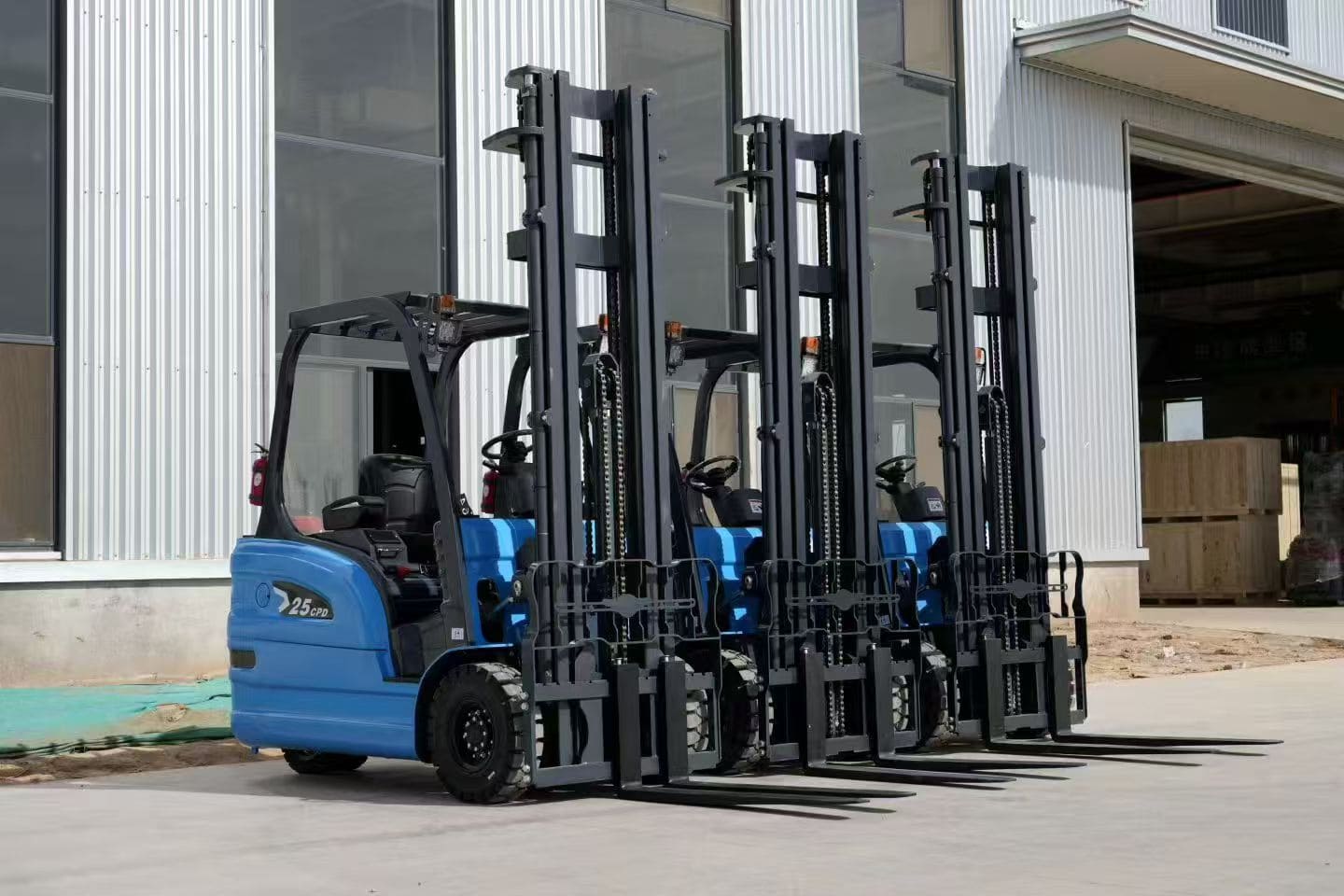
A 1.5 ton electric forklift sits in an interesting part of the forklift market.
It can take on many everyday warehouse loads, yet stays compact enough for operations where a bigger truck would just eat up space for no reason.
That sounds ideal.
Sometimes it is.
But a 1.5 ton forklift is not automatically the best choice just because your pallets weigh less than 1,500 kg.
A warehouse moving 900 kg pallets through tight aisles may find a compact 1.5 ton electric forklift almost perfect. Another warehouse lifting 1,400 kg loads to higher heights may be better off with a 2 ton model.
The difference comes down to how the forklift will actually be used.
Before buying one, look beyond the number on the counterweight.
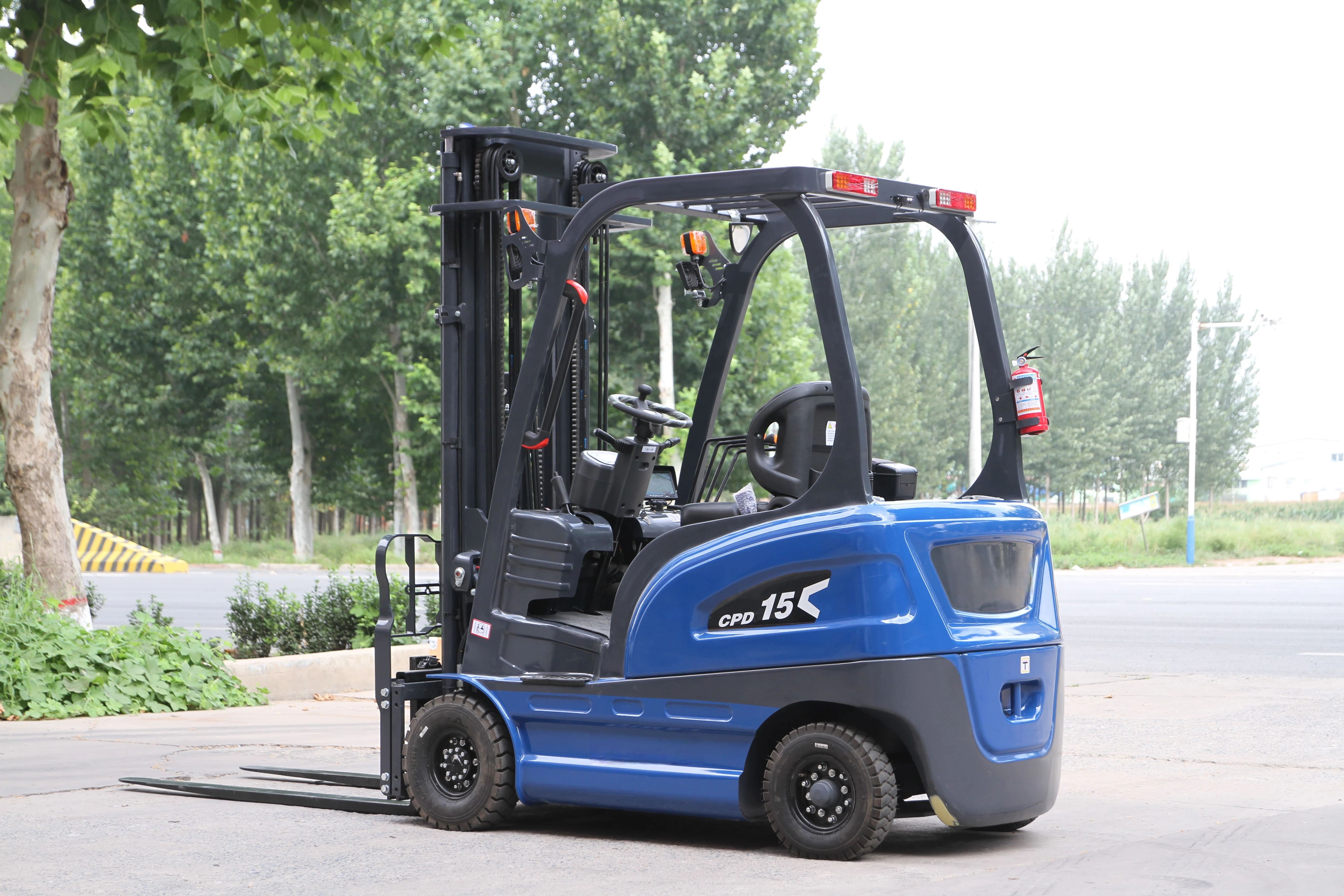
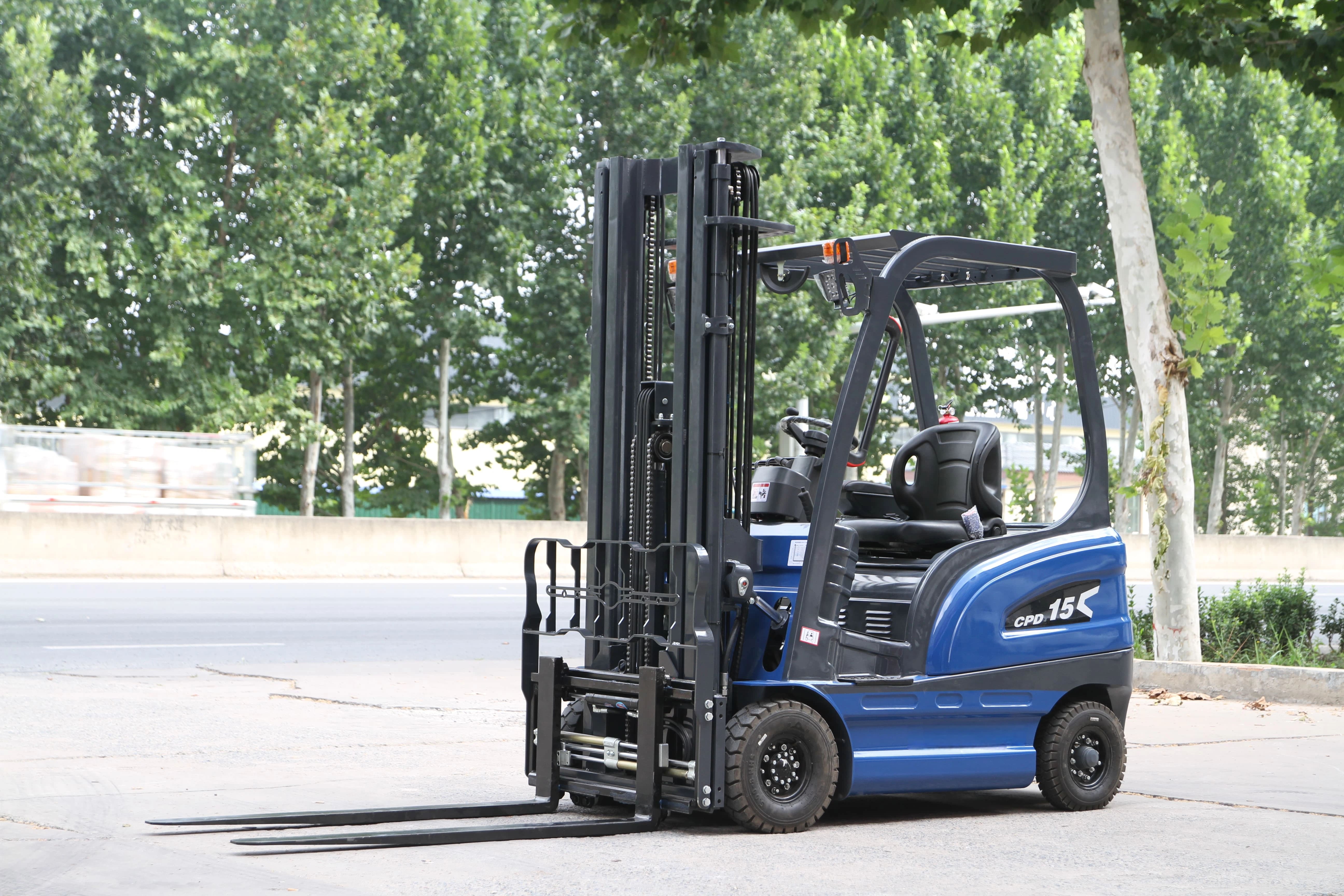
A 1.5 ton electric forklift is a battery-powered counterbalanced forklift with a nominal rated capacity of 1,500 kg under specified load-center and operating conditions.
No diesel, LPG or gasoline engine here. The truck runs on an electric drive system, and that system gets its power from a battery.
Depending on the model, that may be a lithium or lead-acid battery.
These forklifts are commonly used for:
l Pallet handling
l Warehouse storage
l Factory material movement
l Production lines
l Logistics operations
l Retail distribution
l Loading and unloading
l Indoor material handling
Their relatively compact size makes them particularly attractive where the warehouse does not need the capacity or physical size of a 2.5 or 3 ton forklift.
The obvious answer is 1,500 kg.
The useful answer is: it depends on the load and configuration.
The rated capacity of a forklift is based on specified conditions, including load center.
If the load is unusually long, the center of gravity moves farther away from the fork face. This can affect how much the forklift can safely lift.
Lift height can matter too.
The forklift may have a nominal capacity of 1,500 kg, but the available capacity at a high lift height can differ depending on the mast and configuration.
Attachments add another factor.
A side shift, fork positioner or clamp adds weight and can move the load center forward.
This is why a buyer should never select a forklift based only on:
“My pallet weighs 1,450 kg, so a 1.5 ton forklift is enough.”
It might be.
But when the normal load is close to the rated limit, the complete application should be checked.
The 1.5 ton class works particularly well when the warehouse handles relatively light palletized goods and values compact dimensions.
Imagine a small distribution warehouse.
Most pallets weigh between 500 and 1,000 kg. The forklift works mainly between racks, loading areas and packing stations. There are frequent turns and relatively short travel distances.
In that environment, moving to a much larger forklift may offer little benefit.
The operator has to maneuver the truck hundreds of times each day.
A compact machine can simply be easier to work with.
This is where a 1.5 ton electric forklift for warehouse use can make a lot of sense.
Forklift capacity is easy to put on a quotation.
Space is harder to put a price on.
For many European warehouses, however, space is expensive.
A smaller electric forklift can offer advantages in working areas where a larger counterbalanced truck feels cumbersome.
When comparing models, check:
Overall length
Overall width
Wheelbase
Turning radius
Required aisle width
Do not assume every 1.5 ton electric forklift has the same dimensions.
Designs vary considerably between manufacturers.
If aisle space is one of the main reasons you are considering a smaller forklift, compare the actual dimensional drawings.
“Narrow warehouse” means different things to different people.
Measure it.
You need to know whether the forklift can turn with the actual pallet and enter the rack position safely.
Turning radius tells you something, but it is far from the whole story.
Pallet dimensions matter.
Fork length matters.
Rack layout matters.
The space at the end of the aisle matters.
If the warehouse is particularly tight, send the supplier a simple drawing.
It does not need to be a professional CAD file.
A basic layout with aisle widths and pallet dimensions can already help determine whether a particular model is suitable.
A lot of warehouses work at lift heights near 3 meters. That does not make 3,000 mm the right number for everyone, though.
Measure the rack.
Then check the mast.
If the forklift needs to place pallets at higher levels, tell the manufacturer the maximum required fork height and load weight at that height.
Also check the mast height when lowered.
This becomes important if the forklift needs to pass through:
l Low warehouse doors
l Containers
l Production areas
l Loading bays
l Other height-restricted spaces
A forklift that reaches the top rack but cannot pass through the warehouse doorway is not a particularly useful purchase.
For a 1.5 ton electric forklift, battery choice should follow the working schedule.
Lithium batteries have become popular because they can provide fast charging, opportunity charging and relatively low routine maintenance.
For a warehouse operating throughout the day, this can be convenient.
The operator can charge during suitable breaks rather than always relying on one long charging period.
Lead-acid batteries can still be a practical solution where the forklift works fewer hours and initial purchase price is an important consideration.
Neither choice should be automatic.
Ask how many hours the forklift works each day.
Then consider how much time is available for charging.
Those two questions are more useful than simply asking which battery technology is “better.”
Buyers often compare batteries by capacity:
“This forklift has a larger Ah battery, so it must be better.”
Not necessarily.
More Ah means more available energy, but it also means more cost and sometimes more weight.
Actual working time depends on:
l Load weight
l Travel distance
l Number of lifts
l Lift height
l Floor conditions
l Gradients
l Driving style
l Battery condition
l System efficiency
A forklift moving 500 kg pallets over short distances has a very different duty cycle from the same machine continuously lifting 1,300 kg loads.
Tell the supplier what the truck will do.
Then size the battery.
One reason 1.5 ton electric forklifts are common in warehouses is the nature of electric drive.
There are no tailpipe exhaust emissions at the point of use, and electric forklifts generally operate with less noise than comparable internal combustion machines.
That makes them well suited to many indoor applications.
They can be useful around production staff, warehouse operators and packing areas where noise and local exhaust emissions are important considerations.
Electric drive also eliminates some engine-related maintenance associated with internal combustion forklifts.
There are still components to maintain, of course.
Electric does not mean maintenance-free.
An electric forklift is not necessarily limited to indoor work.
But outdoor use needs to be discussed properly.
A smooth concrete yard on a dry day is nothing like uneven ground in winter.
If the forklift needs to work outdoors, consider:
l Ground conditions
l Gradients
l Rain exposure
l Temperature
l Travel distance
l Tire selection
For occasional movement between warehouse buildings, a suitable electric forklift may work well.
For constant operation on rough outdoor surfaces, the requirements can be different.
Do not choose solely from the capacity.
Tires make a real difference in how a compact forklift handles.
What works best comes down to the model and the ground it runs on.
Ask the supplier which tire options they offer and which one suits your application.
A clean indoor warehouse has very different needs from a site where the forklift goes in and out all day.
If floor marking or cleanliness is a concern, bring that up too.
Get this small detail wrong, and you will feel it long after delivery.
A warehouse operator may spend several hours on the forklift.
Control layout therefore matters more than it appears in a brochure.
Traditional mechanical hydraulic levers are familiar and straightforward.
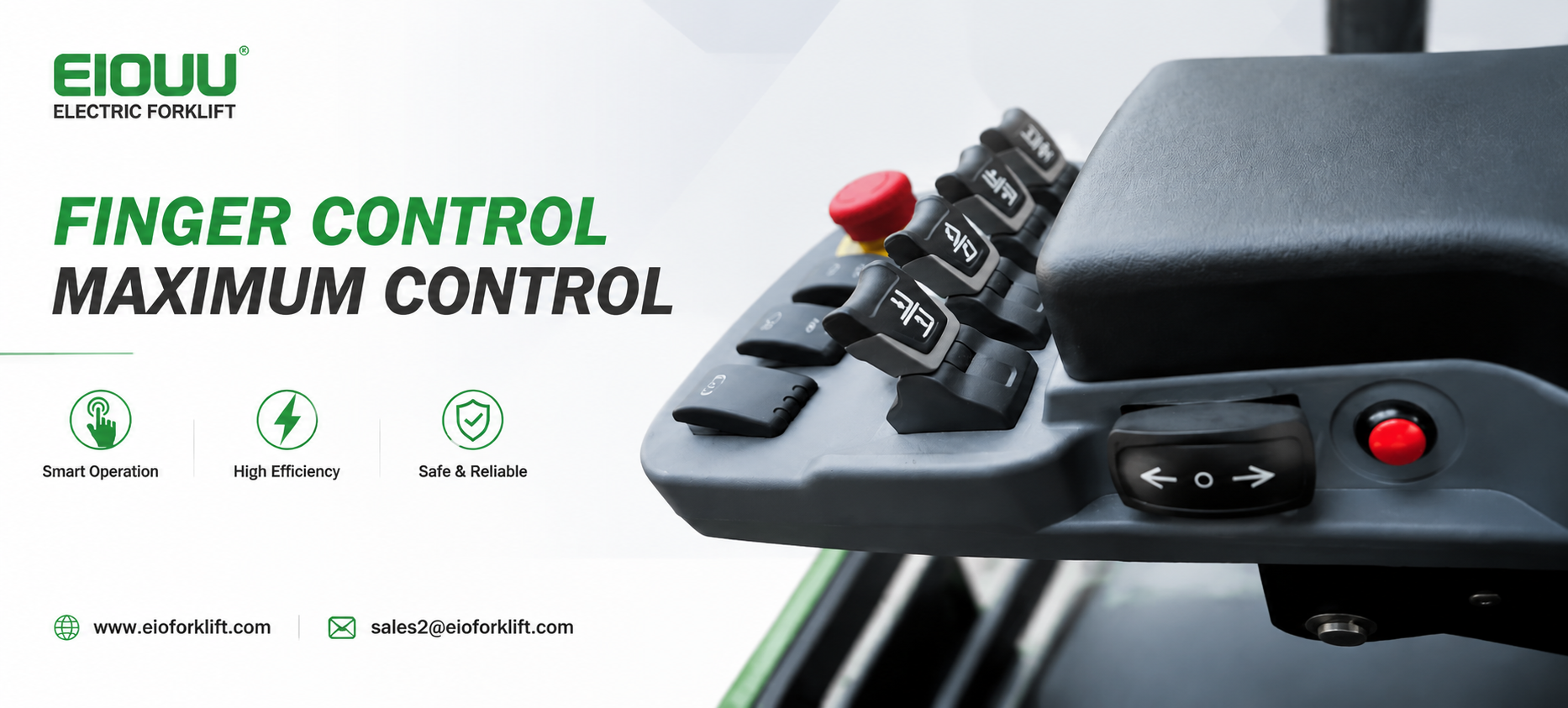
Fingertip controls offer another approach, allowing hydraulic functions to be operated with smaller finger movements.
For repetitive warehouse work, this can make the control area feel cleaner and reduce large repeated lever movements.
Depending on the forklift model, an operator may also benefit from a clear instrument display, adjustable operating modes and other electronic functions.
Do not judge these features only from photographs.
If possible, let an experienced operator drive the machine.
Safety should be considered as a complete system rather than a list of marketing terms.
Look at how the forklift behaves when the operator leaves the seat.
Check braking.
Check lowering control.
Look at visibility through the mast.
Check lighting if the truck will operate in darker loading areas.
Depending on the model, features may include off-seat power protection, controlled cargo lowering, energy-recovery braking, rear axle damping and LED lighting.
The exact setup differs, so check what comes on the machine being quoted.
A useful safety feature should make daily operation more predictable, not simply add another line to a catalogue.
This is probably the most important question for buyers considering this capacity.
A 1.5 ton model makes sense when your normal loads are comfortably below its working limits and compact size is valuable.
A 2 ton forklift may be a better choice when:
l Loads frequently approach 1,500 kg
l Load dimensions vary considerably
l Higher lift heights are required
l Heavy attachments will be used
l Future load requirements may increase
l Extra capacity flexibility is valuable
But buying the 2 ton model “just in case” is not always necessary either.
A larger forklift may cost more and require additional maneuvering space.
The correct approach is to leave a sensible operating margin without buying more truck than the warehouse needs.
Factor | 1.5 Ton Electric Forklift | 2 Ton Electric Forklift |
Rated Capacity | 1,500 kg | 2,000 kg |
Typical Loads | Light to medium | Medium |
Warehouse Maneuverability | Often very good | Depends on design |
Truck Size | Usually more compact | Usually larger |
Purchase Cost | Generally lower | Generally higher |
Capacity Flexibility | Lower | Higher |
Best Use | Compact warehouse handling | Broader warehouse/factory work |
This is only a general comparison.
Actual dimensions and specifications should always be checked model by model.
A compact forklift can still be equipped for specialized applications, depending on the model.
Common options can include side shift and other attachments.
However, attachments add weight and may change the load center.
This can affect remaining lifting capacity.
If your 1.5 ton forklift will use an attachment, provide the supplier with:
Attachment type + maximum load weight + load dimensions + required lift height.
Do this before ordering.
Not after the attachment has already been installed.
A 1.5 ton electric forklift may be relatively simple to operate, but buyers should still think about long-term support.
Ask which components need regular inspection.
Ask about:
l Wheels and tires
l Hydraulic seals
l Sensors
l Switches
l Brake components
l Controllers
l Chargers
l Battery components
For a single warehouse truck, fast access to spare parts reduces downtime.
For a distributor selling dozens of machines, it becomes essential.
A small component that takes weeks to obtain can stop an otherwise perfectly good forklift.
A useful forklift inquiry does not need to be long.
Something like this is enough:
Maximum load: 1,200 kg
Pallet size: 1,200 × 800 mm
Lift height: 3,000 mm
Working time: 5 hours/day
Environment: Indoor warehouse
Aisle width: 3,000 mm
Battery: Lithium preferred
Attachment: Side shift
Now the manufacturer has something useful to work with.
Compare that with:
“Send best price for 1.5T forklift.”
Both messages will probably receive a quotation.
Only one helps the supplier choose the right configuration.
For forklift dealers and wholesalers, the 1.5 ton class can fill an important position at the compact end of an electric forklift range.
It can appeal to customers who do not need a larger 2.5 or 3 ton machine but still want a counterbalanced forklift rather than an electric stacker.
Potential customers include smaller warehouses, light manufacturing businesses, distribution companies and factories handling relatively light pallets.
For distributors, compact dimensions can also be a useful selling point.
Do not market the machine only as:
“1,500 kg capacity.”
Explain where it fits.
That gives the salesperson a much stronger story.
At EIOUU, we manufacture electric material handling equipment for international B2B customers, including forklift dealers, wholesalers, importers, warehouses and industrial buyers.
Our compact electric forklift solutions are designed around practical warehouse and factory applications.
Depending on the model and project requirements, configurations can include features and options such as:
l Lithium battery solutions
l Compact body design
l Different mast configurations
l Fork options
l Tire options
l Fingertip controls on applicable models
l Intelligent battery management
l Operator-protection functions
l OEM & ODM branding
For distributor projects, product configuration can also be discussed according to local market requirements.
If you are unsure whether a 1.5 ton or 2 ton electric forklift is more suitable, send us the maximum load, pallet dimensions, lift height and aisle width.
Those details normally make the answer much clearer.
A 1.5 ton electric forklift can be an excellent warehouse machine.
But only when the application fits.
It works particularly well where loads are moderate, space is valuable and the warehouse wants a compact electric truck for everyday pallet handling.
Don’t buy one just because your heaviest pallet comes in under 1,500 kg.
Check the load center.
Check the lift height.
Measure the aisle.
Think about attachments.
Work out how many hours the truck will run.
Then decide whether 1.5 tons gives you enough working margin.
Sometimes the answer will be yes.
Sometimes moving up to a 2 ton forklift will be the better decision.
The best forklift is not the one with the highest capacity.
It is the smallest machine that can comfortably and appropriately do the work you actually need it to do.
A 1.5 ton electric forklift has a nominal rated capacity of 1,500 kg under specified conditions. Actual capacity can depend on load center, lift height, mast configuration and attachments.
Yes. It can be well suited to warehouses handling light to medium pallet loads, particularly where compact dimensions and maneuverability are important.
Choose according to actual load weight, load dimensions, lift height, attachments and available warehouse space. If loads frequently approach 1,500 kg, a 2 ton model may provide more operating flexibility.
Yes, lithium battery configurations are available for many compact electric forklift models. Battery capacity should be selected according to daily operating time and charging requirements.
Available lift heights depend on the mast and model. Buyers should confirm both the required maximum fork height and the remaining load capacity at that height before ordering.
Compact 1.5 ton models can work well where space is restricted, but actual suitability depends on overall dimensions, turning radius, pallet size and required stacking aisle width.
Depending on the manufacturer, model and order quantity, OEM options can include private branding, colors, battery configurations, mast options, forks and other specifications.
 Previous: None
1.5 Ton Electric Forklift: Is It Right for Your Warehouse?
Published on Oct. 10, 2026
How to Import Electric Forklifts from China to Europe
Published on Oct. 06, 2026


314, Building 3, No. 12 Haitai Development 2nd Road, Binhai High-tech Zone, Xiqing District, Tianjin, China


Copyright © Tianjin HRX Technology Co., Ltd. All Rights Reserved. Sitemap
Home ProductsAbout usOEM/ODMNewsContact Us