Pulished on Oct. 22, 2026
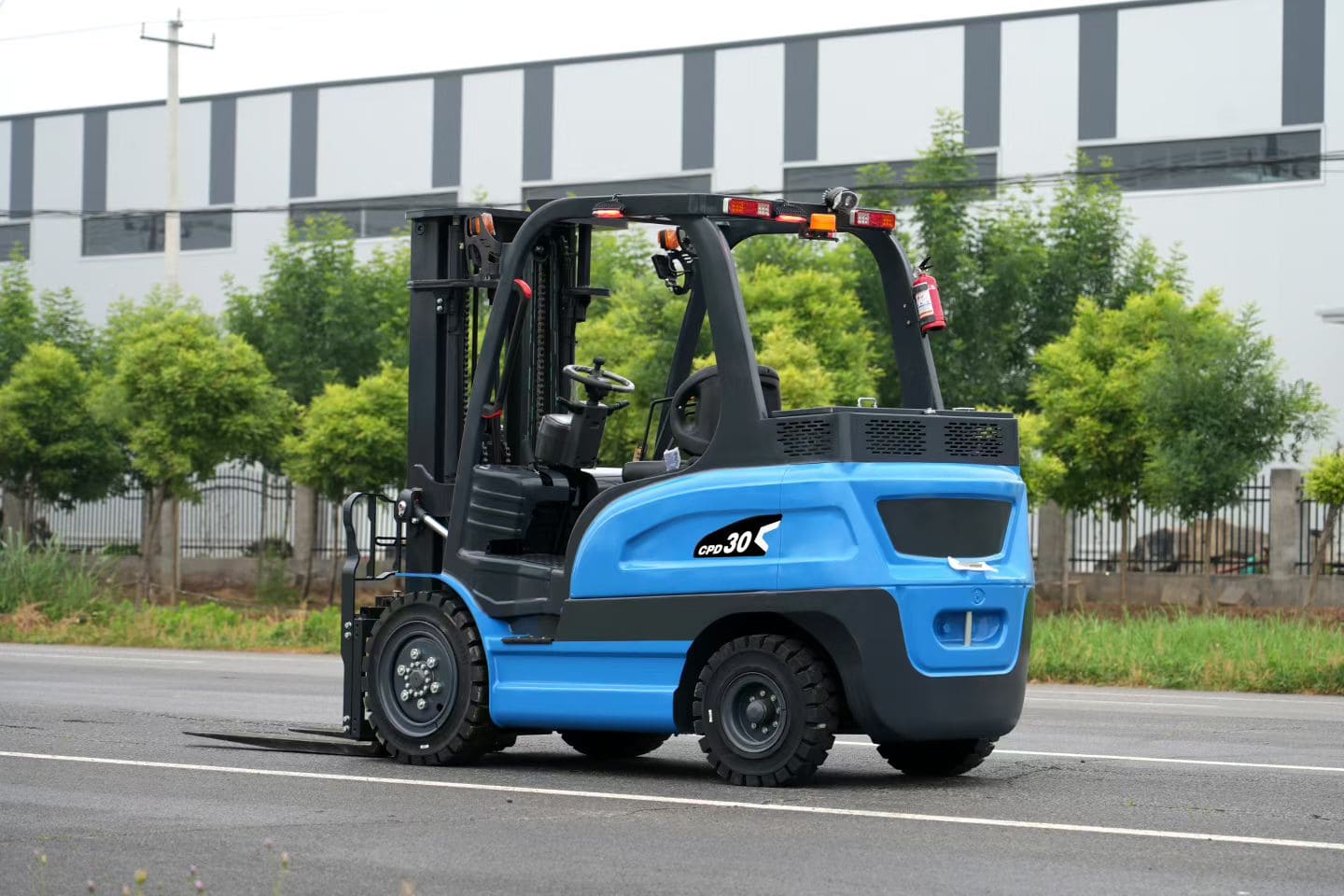
A 3 ton electric forklift pushes electric material handling past basic warehouse tasks and into tougher industrial applications.
For most companies, its 3,000 kg rating handles heavy pallets, dense goods and mixed loads, so they don’t need to upgrade to a much bigger forklift right away.
That makes 3 ton units attractive for factories, logistics hubs, construction material suppliers, paper & packaging sites and warehouses dealing with more than standard light pallets.
But selecting a 3 ton electric forklift is more than just picking a machine marked “3000 kg” on its spec sheet.
Heavy-duty work stresses the battery, mast, axle, brakes, tires and hydraulic parts. Attachments can also greatly alter real lifting capacity.
So before choosing a model, it is worth looking at the whole job.
A 3 ton electric forklift is a battery-powered counterbalanced forklift with a nominal rated load capacity of 3,000 kg under specified operating conditions.
It is commonly used for:
l Heavy pallet handling
l Manufacturing
l Metal products
l Paper and packaging
l Building materials
l Logistics centers
l Distribution warehouses
l Machinery components
l Loading and unloading
l Indoor and suitable outdoor applications
Against 1.5 ton and 2 ton smaller forklifts, the 3 ton electric version is constructed to handle heavier loads and harder duty cycles.
That said, it won’t automatically turn into a big machine.
Current electric forklift designs can stay reasonably compact. This works well for customers who need solid lifting capacity plus easy maneuvering.
This is the first thing buyers should check carefully.
A forklift rated at 3,000 kg does not necessarily lift 3,000 kg under every possible condition.
Actual available capacity can be affected by:
l Load center
l Lift height
l Mast configuration
l Fork length
l Attachment weight
l Load dimensions
A 3 ton pallet with a standard load center is one situation.
A long steel product or paper roll with the center of gravity farther forward is another.
Mounting heavy attachments like a clamp will reduce residual capacity further.
If your typical load is already nearly 3,000 kg, nominal capacity alone cannot guide your forklift selection.
Pass along actual load weight, dimensions, required lift height and attachment details to your supplier.
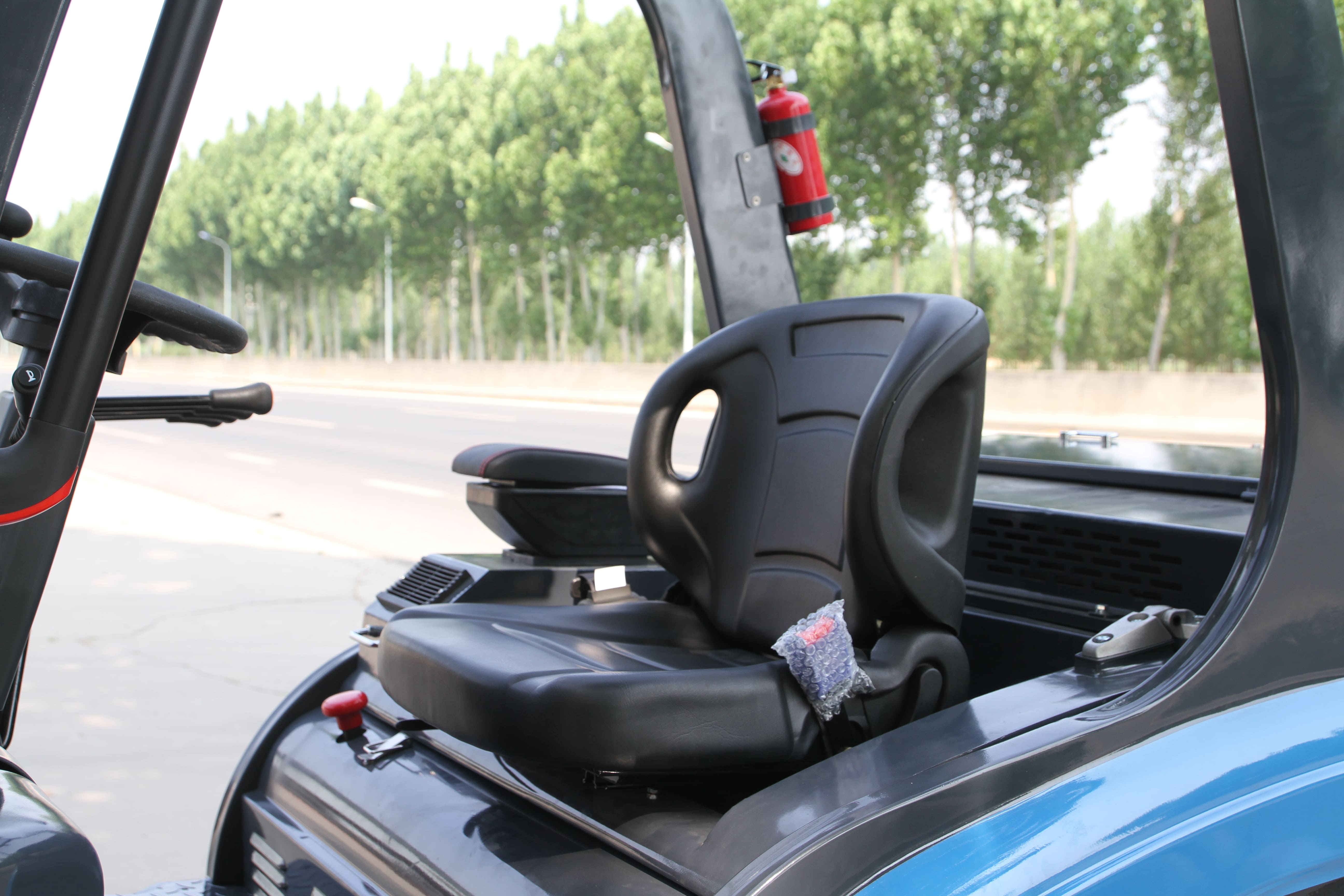
A 3 ton forklift works well once operations go past regular warehouse pallet work.
Take a factory with routine loads ranging from 1,800 to 2,600 kg.
A 2 ton forklift lacks sufficient capacity.
A 2.5 ton model sits too near its maximum rating.
A 3 ton electric forklift creates a safer, usable capacity buffer.
Typical applications include:
l Heavy production materials
l Machine parts
l Metal coils or components
l Paper products
l Large palletized goods
l Industrial packaging
l Building materials
l Heavier logistics loads
It’s not just about the higher load capacity.
This flexibility lets you handle a broader mix of goods, so you don’t need to swap trucks when your product types shift.
The difference between 2.5 ton and 3 ton looks minor when you only check the spec data.
Out in the field, that additional 500 kg creates real, practical value.
2.5 ton forklifts are often a great match for medium-load warehouse and factory jobs.
A 3 ton model becomes more attractive when:
l Loads regularly exceed 2,300–2,500 kg
l Pallet weights vary
l Heavy attachments are used
l Higher capacity reserve is required
l The customer wants one truck to cover a broader range of work
There is still a trade-off.
The 3 ton truck may cost more and may require more space.
If your loads rarely exceed 2 tons, buying 3 tons simply for “extra safety” may not be necessary.
Capacity should match the real application.
A 3.5 ton forklift becomes worth considering when the 3 ton machine will spend much of its life close to its limit.
This can happen with:
l Heavy attachments
l Long loads
l High lift applications
l Repeated 2.8–3.0 ton handling
l Future customer requirements
For loads that typically run 2.2-2.5 tons, a 3 ton forklift gives you enough safety margin during operation.
If your daily work regularly nears the 3 ton mark, a 3.5 ton truck leaves more room for flexible handling.
Do not make that decision from load weight alone.
The complete load center and lift requirement should be checked.
When buyers hear “heavy-duty forklift,” they often think only about tonnage.
That is too narrow.
It’s possible for a forklift to handle heavy-duty work, even if average loads remain below 3,000 kg.
Think about this case: one unit runs eight or ten hours daily. It keeps lifting, turning and moving nonstop. This creates a harder duty cycle compared to a 3 ton forklift that only sees light use through each shift.
Heavy-duty can mean:
l Long working hours
l High travel distance
l Frequent lifting
l Heavy average loads
l Uneven outdoor surfaces
l Gradients
l Repeated starts and stops
l Frequent attachment use
All these factors must be considered when defining your forklift’s full setup.
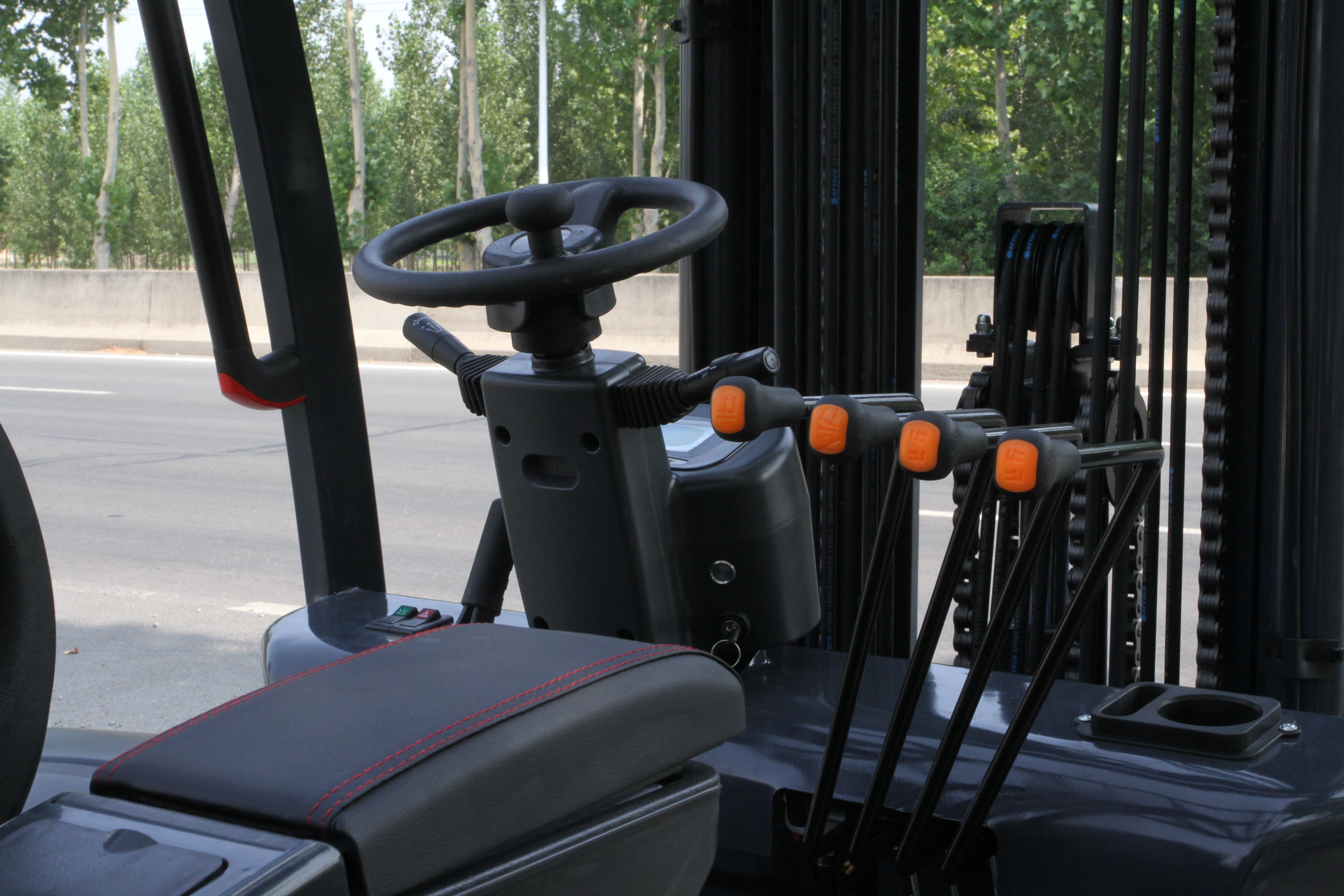
Battery selection grows more critical when operation intensity rises.
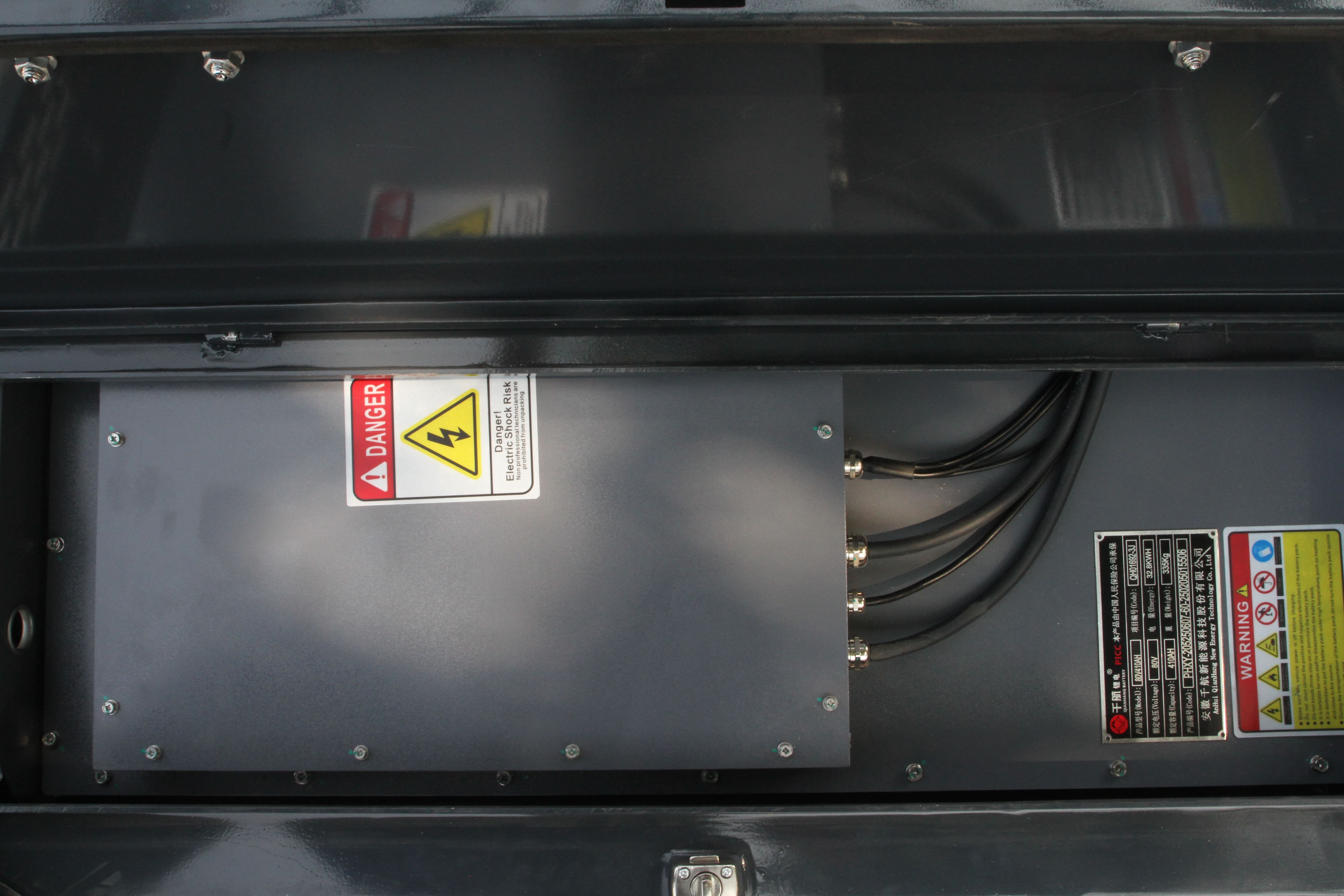
A 3 ton lithium electric forklift can be particularly suitable for busy warehouses and industrial users that need frequent operation.
Lithium batteries can offer:
l Fast charging
l Opportunity charging
l Lower routine battery maintenance
l Good suitability for longer daily operation
l Consistent electric power delivery
For example, a logistics center using a forklift across a long shift may charge during breaks rather than waiting for a full overnight charging window.
That can increase equipment availability.
The exact benefit depends on the duty cycle.
Yes.
Lead-acid can still make sense for businesses with lighter working schedules and sufficient charging time.
If a 3 ton forklift operates only a few hours per day, the customer may not need the advantages of fast opportunity charging.
The lower initial cost of lead-acid can therefore remain attractive.
The important point is not to choose battery chemistry in isolation.
Look at:
daily operating hours + charging opportunities + maintenance preference + budget.
That combination gives a much better answer.
You won’t find a single battery size that fits all 3 ton electric forklifts.
Inside a small warehouse, moving 1,500 kg pallets consumes less power. But run that same machine repeatedly with 2,800 kg cargo over long distances, and energy demand rises.
Battery demand is affected by:
l Load weight
l Travel distance
l Lift frequency
l Lift height
l Gradients
l Driving speed
l Tire type
l Ambient conditions
l Operator behavior
This explains why suppliers must understand your actual operation first, before picking a battery for you.
Big Ah figures look appealing, but excess battery capacity just adds unnecessary expense.
For lithium setups, the Battery Management System (BMS) plays a vital role within the forklift’s electrical framework.
Built to its own design, the BMS tracks voltage, current, temperature and state of charge. It also protects the battery when predefined abnormal conditions occur.
Also check the charger.
Confirm:
l Battery voltage
l Battery capacity
l Charger power
l Charging time
l Electrical supply requirement
l Plug/configuration where applicable
Battery and charger should be treated as one system.
This point matters most for heavy-duty warehouse operations.
The 3-ton rating applies only at standard load center and lower lift height. Higher mast lift reduces usable capacity.
For warehouses with tall racks, ask for residual capacity at your target lift height.
For example:
Load: 2,700 kg
Lift height: 4,500 mm
Attachment: Side shift
That is much more useful than simply asking for a 3 ton forklift with a 4.5-meter mast.
The supplier needs the whole combination.
Heavy loads put more demand on the mast.
Depending on the application, buyers may consider duplex or triplex mast configurations.
The right choice depends on:
l Required lift height
l Closed mast height
l Warehouse doors
l Container use
l Visibility
l Residual capacity
Do not choose the tallest mast available unless the warehouse actually needs it.
A higher mast can add cost, weight and complexity.
Select the mast around the rack system.
For a 3 ton electric forklift, mechanical construction deserves more attention.
The axle, frame and mast are carrying heavier working loads than a small warehouse truck.
Ask the supplier about:
l Axle design
l Frame construction
l Mast structure
l Hydraulic cylinder design
l Steering system
l Braking system
At EIOUU, applicable configurations can include a one-piece cast steel axle, reinforced mast structure, anti-leakage cylinder design and rear axle damping.
Unlike battery capacity, these details don’t stand out at a glance, but they directly affect how it copes with frequent heavy tasks.
Smooth, dependable hydraulic action is key when handling heavy pallets.
Test its lift and drop functions using your actual working load.
Look for:
l Smooth mast movement
l Controlled lowering
l Stable load positioning
l Hydraulic leakage
l Excessive noise
A good demonstration should show the forklift working with a load, not only lifting empty forks.
For a distributor, this is an important part of supplier evaluation.
A 3 ton electric forklift with a heavy pallet on board has significantly more momentum than lighter warehouse forklifts.
Good braking is essential for this reason.
Different machines come with different brake setups. You may see regenerative braking, service brakes, plus other speed-control features.
Above all, the braking response needs to feel consistent.
Operators have to keep the truck steady when approaching racks, cornering, or travelling on permitted inclines.
Let your supplier know upfront if you will use this forklift on ramps or sloped surfaces.
The tires you pick impact stability, ride feel and the kinds of surfaces you can work on.
Trucks that run only inside on smooth concrete have simple tire requirements.
Things shift when the forklift runs out in yards, crosses door edges or bumps over uneven ground.
Consider:
l Floor quality
l Outdoor work
l Gradients
l Load weight
l Travel distance
l Wear rate
l Cleanliness requirements
Buyers running the truck both inside the warehouse and out should pick the right tire build—this can change performance a lot.
Sure. It depends on the forklift unit and your working site.
These electric trucks don’t have to stay inside warehouse buildings only.
Even so, you can’t take outdoor operation for granted.
It works well on flat concrete at loading bays.
Loose stones, mud or rough ground will bring extra challenges.
If the truck works outside, tell the supplier about:
l Ground condition
l Rain exposure
l Temperature
l Slopes
l Travel distance
l Tire requirements
The most demanding part of the application should guide the configuration.
For heavy warehouse applications, side shift can save a lot of repositioning.
The operator can move the forks laterally when placing a pallet without moving the entire truck.
This becomes especially useful with heavier loads because repeated corrections take more time.
However, side shift adds weight to the front of the forklift.
Residual capacity should therefore be checked.
If your load runs near the 3,000 kg mark, never presume full rated lifting capacity stays available once an attachment is mounted.
The 3 ton class is often used with attachments.
These can include:
l Bale clamps
l Carton clamps
l Paper roll clamps
l Fork positioners
l Longer forks
l Other specialized equipment
Attachment applications need proper capacity calculations.
For anyone handling 2.7 ton paper rolls via a heavy clamp, a forklift rated at 3 tons on paper may not cut it.
The attachment weight and load center can reduce effective capacity.
Send the complete application information before finalizing the model.
For operators working long shifts, control layout becomes important.
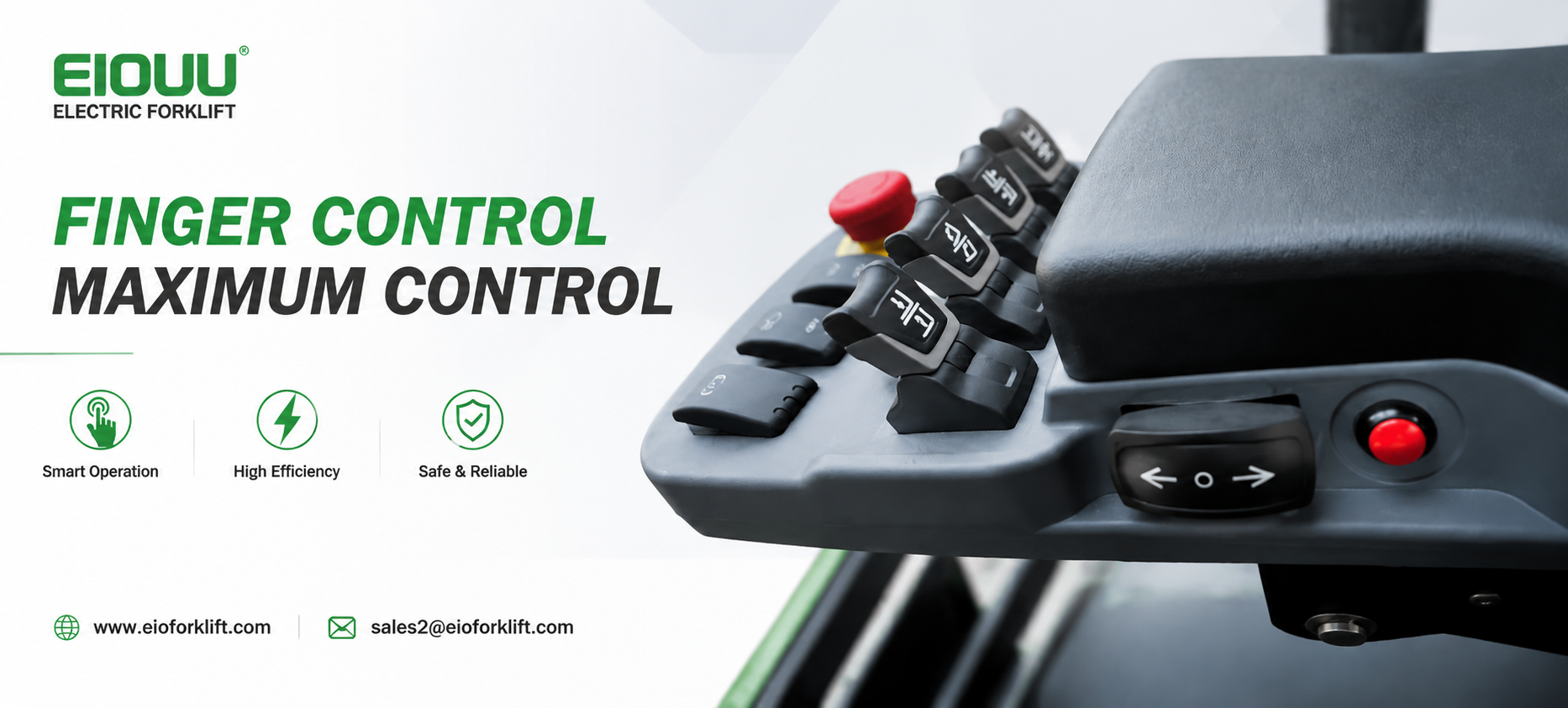
Fingertip controls cut large lever movements for repeated hydraulic work.
This helps busy warehouses where operators lift, lower and align loads all day.
For distributors, fingertip controls also back a higher-spec product positioning.
Buyers see and feel the difference in a demo.
It is easier to explain than many unseen technical features.
Heavy-duty warehouse work often means long working hours.
This increases the importance of:
l Seat comfort
l Visibility
l Vibration
l Steering feel
l Pedal position
l Control layout
l Instrument display
A forklift that feels acceptable during a five-minute test may feel very different after six hours.
If you are buying for a large fleet, let experienced operators test the machine before standardizing the model.
Their feedback can be very useful.
Safety should be built into normal operation.
Depending on the model, useful features can include:
l Off-seat power protection
l Controlled cargo lowering
l LED lighting
l Clear instrument display
l Speed management
l Energy-recovery braking
l Rear axle damping
l Battery monitoring
Mast visibility is also important.
Heavy loads can reduce the operator's view, so the mast and fork carriage design should be considered as part of the machine.
A heavy-duty forklift will eventually need service.
The question is how easy it is to diagnose and repair.
Look at access to:
l Battery
l Controller
l Electrical components
l Hydraulic system
l Brake components
l Sensors
l Wheels
For fleet operators, technician time becomes a real cost.
For distributors, easy service access can make the product easier to support in the field.
Don’t wait until your first breakdown.
Request a recommended spare parts list from the manufacturer.
For a commercial fleet or distributor order, common stock may include suitable:
l Sensors
l Switches
l Hydraulic seals
l Wheels
l Brake components
l Electrical parts
l Charger-related components
l Other service parts
The key is not holding every possible component.
It is knowing that parts can be identified and supplied when required.
Ask how serial numbers are used to identify the correct replacement components.
3-ton models are a vital capacity segment for forklift dealers and importers.
They fit customers who need more than standard warehouse trucks, without stepping up to large industrial forklifts.
Potential customers include:
l Manufacturing companies
l Logistics businesses
l Paper and packaging
l Industrial warehouses
l Building material suppliers
l Machinery companies
For a distributor building an electric forklift product range, a well-configured 3 ton model can therefore become one of the core products rather than a specialist option.
Depending on manufacturer capability and order volume, OEM 3 ton electric forklifts can be configured for distributors and private brands.
Options may include:
l Distributor logo
l Custom colors
l Product labels
l Lithium battery configurations
l Mast options
l Fork dimensions
l Tire options
l Side shift
l Clamps or other attachments
l Packaging
For long-term OEM projects, consistent product build matters.
When a distributor sells the same 3-ton unit for years, core parts must stay traceable, and any updates shared ahead of production.
This simplifies spare parts support significantly.
A useful 3 ton forklift inquiry could look like this:
Maximum load: 2,600 kg
Load size: 1,200 × 1,200 mm
Lift height: 4,500 mm
Daily operation: 8 hours
Environment: Warehouse + outdoor concrete yard
Battery: Lithium preferred
Attachment: Side shift
Quantity: 6 units
This gives the manufacturer a clear application.
You are much more likely to receive a useful configuration than if you simply write:
“Send best price for 3 ton electric forklift.”
At EIOUU, we manufacture electric material handling equipment for international B2B customers, including forklift dealers, wholesalers, importers, warehouses and industrial buyers.
Our 3 ton electric forklift solutions are intended for warehouse, manufacturing and industrial applications where buyers need higher capacity combined with electric operation.
Depending on the model and project requirements, available configurations can include:
l Lithium battery
l Fingertip controls
l Different mast configurations
l Tire options
l Side shift
l Clamp attachments
l Intelligent BMS battery management
l Off-seat power protection
l One-piece cast steel axle
l Anti-leakage cylinder design
l Rear axle damping
l Energy-recovery braking
l OEM & ODM solutions
Distributors may also explore private branding and custom market setups, based on order volume and technical specs.
When choosing between 2.5 ton, 3 ton or 3.5 ton electric forklifts, share your max load, load size, lift height, attachment type and site conditions.
That information normally makes the correct capacity much easier to determine.
A 3 ton electric forklift can be a very capable heavy-duty warehouse machine.
But only when the configuration matches the job.
Do not look at the 3,000 kg capacity and stop there.
Check the load center.
Check the mast.
Check residual capacity.
Think about battery size.
Consider the attachment.
Look at the ground and travel distance.
And pay attention to the axle, brakes, hydraulic system and spare-parts support.
For light work, a 3 ton forklift may be more machine than you need.
For serious warehouse and manufacturing applications, it can be exactly the right middle ground between a standard warehouse truck and a larger industrial forklift.
The correct decision comes from the application, not the catalogue.
A 3 ton electric forklift has a nominal rated capacity of 3,000 kg under specified conditions. Actual available capacity can be affected by load center, lift height, mast configuration and attachments.
Yes. A properly configured 3 ton electric forklift can be suitable for heavier warehouse, manufacturing and logistics applications where the load and duty cycle fall within the machine's specifications.
A 2.5 ton model can suit medium-duty applications, while a 3 ton forklift provides more capacity flexibility for heavier pallets and attachments. The decision should be based on actual load weight and operating conditions.
If loads regularly approach the practical limits of a 3 ton model, especially with heavy attachments or higher lift heights, a 3.5 ton forklift may be more suitable.
Yes. Lithium battery configurations can be suitable for 3 ton forklifts, particularly for longer working hours, opportunity charging and operations seeking lower routine battery maintenance.
It can, depending on the model and conditions. Ground surface, weather exposure, gradients, tire selection and electrical protection should all be considered.
Many models can use suitable attachments such as clamps. Because attachments add weight and change the load center, the remaining capacity must be checked for the complete configuration.
Yes, depending on the manufacturer, model and project. OEM options can include private branding, colors, battery configurations, masts, forks, tires and attachments.
 Previous: None
 Next: 5555
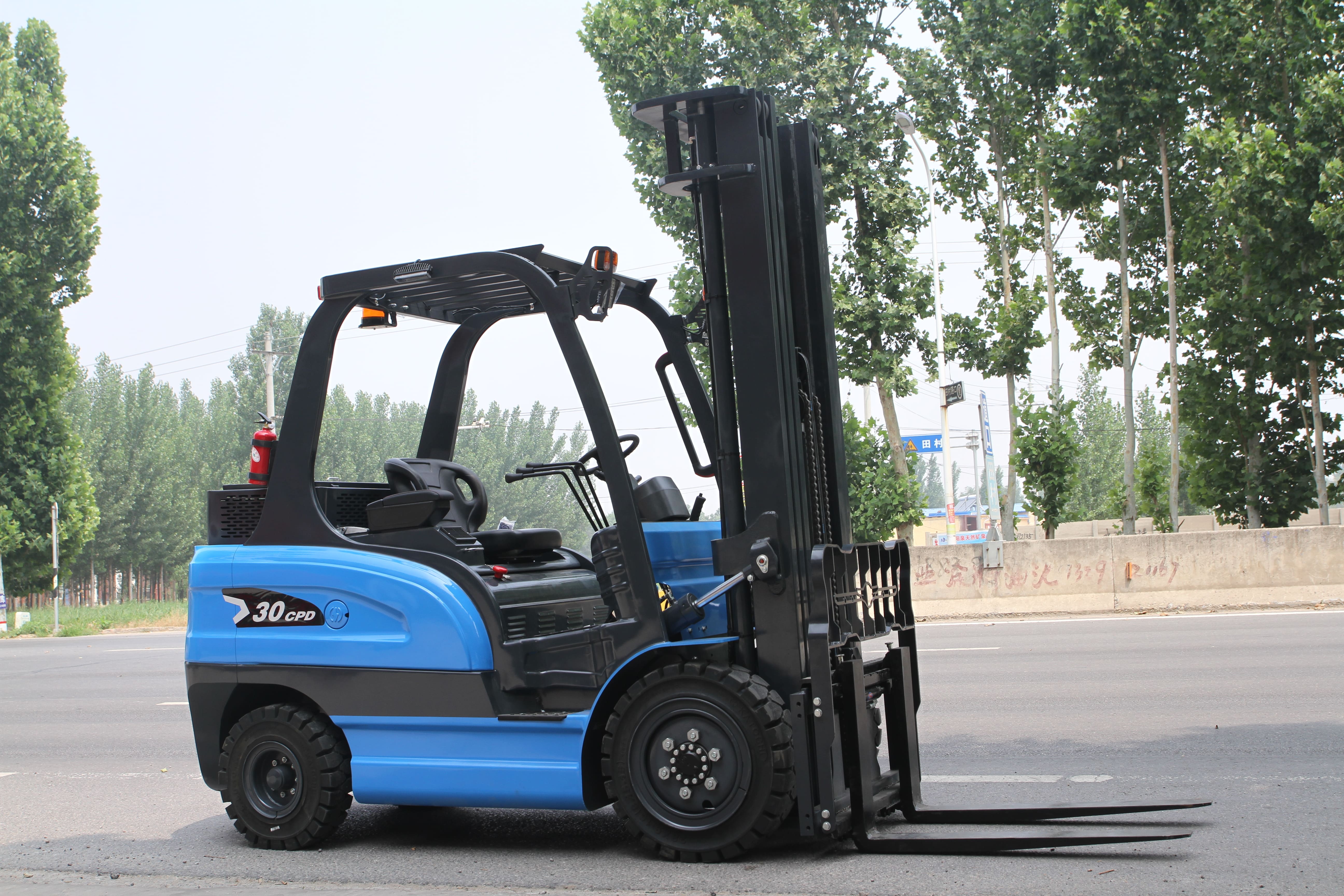
3 Ton Electric Forklift Buying Guide for Heavy-Duty Warehouse Applications
Published on Oct. 22, 2026
2.5 Ton Electric Forklift Buying Guide: Capacity, Battery and Applications
Published on Oct. 16, 2026


314, Building 3, No. 12 Haitai Development 2nd Road, Binhai High-tech Zone, Xiqing District, Tianjin, China


Copyright © Tianjin HRX Technology Co., Ltd. All Rights Reserved. Sitemap
Home ProductsAbout usFor DistributorsOEM/ODMNewsContact Us