Pulished on Oct. 31, 2026
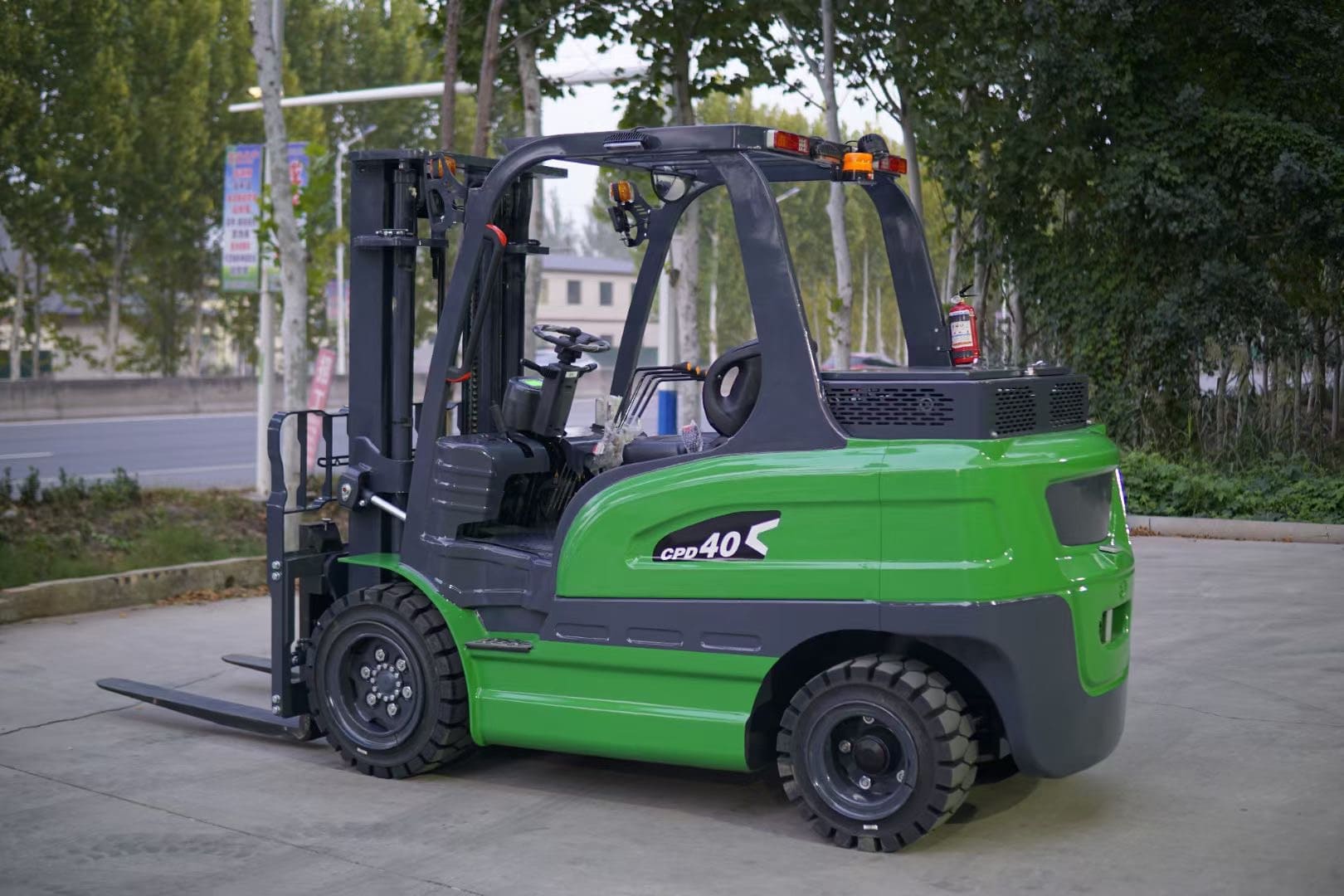
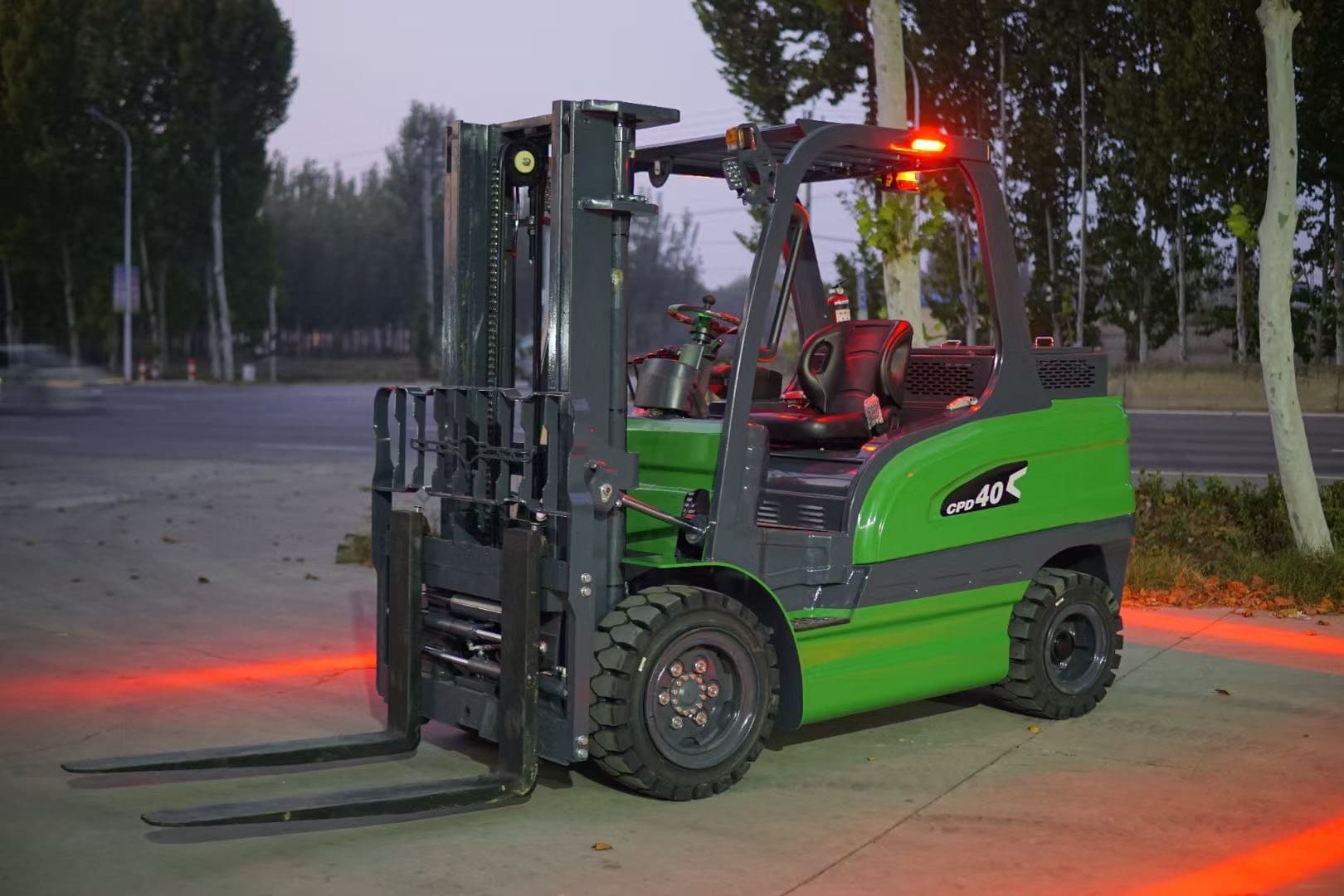
A 4 ton electric forklift is not your typical light-duty warehouse truck.
Machines of this grade are designed for heavier pallets, compact high-density industrial materials and rigorous daily tasks. Some sites use them for large warehouse shipments; others handle mechanical parts, paper stock, building supplies, or cargo requiring clamps and custom attachments.
This is also where buying decisions become less forgiving.
Picking the wrong 1.5 ton forklift usually only causes minor hassle. But if you get the specs wrong on a 4 ton electric forklift, costs can add up quickly. Its battery, mast, tires, brakes and attachments all operate together under substantial load.
That’s why you should assess your actual working scenario first, before looking at price tags.
What are you lifting?
What is the true weight of your loads?
What’s the required lifting height?
How many hours will the forklift run per day?
How much usable space is available inside your warehouse?
These considerations outweigh the figures printed on sales brochures.
A 4 ton electric forklift is a battery-powered counterbalanced forklift with a nominal rated capacity of 4,000 kg under the operating conditions specified by the manufacturer.
Common applications include:
l Heavy warehouse pallet handling
l Manufacturing plants
l Machinery components
l Metal products
l Paper and packaging
l Building materials
l Industrial logistics
l Large distribution centers
l Loading and unloading
l Indoor and suitable outdoor work
If you move up from smaller electric forklifts, the 4 ton range handles heavier workloads. Its frame design, battery arrangement and site conditions all deserve careful review.
Distributors also gain access to industrial buyers that standard 2 or 3 ton forklifts simply cannot support.
No.
The 4,000 kg figure is a nominal rating, not a promise that the machine can lift 4 tons in every situation.
Actual capacity can be affected by:
l Load center
l Lift height
l Mast type
l Fork length
l Attachment weight
l Load dimensions
This becomes especially important with long or bulky loads.
A compact pallet with its center of gravity close to the fork face is one situation.
A long steel component or large paper roll is another.
Attachments can change the situation again.
If the application is close to the forklift's rated limit, ask the manufacturer to check the complete configuration.
You may find a 4 ton model worth considering once smaller forklifts can’t offer enough safety margin for your loads.
Take a factory with routine loads sitting between 3,000 and 3,500 kg, for example.
A 3 ton forklift won’t cut it here.
A 3.5 ton unit might get the job done on simple jobs, yet it leaves very little room for adjustments. That’s especially true when you add attachments like side shift, fork positioner or clamp.
A 4 ton electric forklift gives more room.
Typical applications include:
l Machinery manufacturing
l Metalworking
l Heavy pallet handling
l Paper and packaging
l Industrial materials
l Construction-related products
l Large logistics operations
For these users, 4 tons is not about buying “more forklift.”
It is about getting enough capacity without moving immediately into even larger 5 or 6 ton equipment.
This is the most natural comparison.
A 3.5 ton electric forklift is already capable of serious warehouse and industrial work.
So when is 4 tons worth the step up?
Choose 4 tons when:
l Loads regularly exceed 3,000 kg
l Loads are long or bulky
l Heavy attachments are used
l More residual capacity is needed
l Future load requirements may increase
l The truck will serve mixed heavy-duty applications
A 3.5 ton model may still be the better choice when:
l Loads stay comfortably below 3,000 kg
l Warehouse space is tight
l Lower purchase cost matters
l The forklift works mainly with standard pallets
The correct choice comes from the actual load, not from simply choosing the next size up.
As forklift capacity increases, buyers sometimes assume that more is always better.
That isn’t the case.
While a 5 ton forklift offers greater reserve than a 4 ton model, it typically costs more, needs more aisle space and uses more power.
A 4 ton forklift is the right fit when it provides enough safety margin, without extra size and added cost you don’t require.
The rule is straightforward:
Do not buy at the exact limit.
But also:
Do not oversize without a reason.
For warehouses and distributors, that balance matters.
A 4 ton forklift can face heavy-duty use even if it rarely carries a full 4-ton load.
Duty cycle also matters.
Heavy-duty use can include:
l Long shifts
l Frequent lifting
l Long travel distances
l Repeated starts and stops
l Outdoor work
l Slopes
l Rougher surfaces
l Attachment use
l High average loads
Running 8 hours daily with repeated 2.5 ton lifts can wear the machine more than occasional 4-ton picks.
That’s why suppliers need your duty cycle details before locking in the right setup.
A 4 ton lithium electric forklift can be a strong choice for intensive warehouse and industrial work.
Lithium batteries can offer practical advantages such as:
l Faster charging
l Opportunity charging
l Reduced routine battery maintenance
l Good suitability for frequent operation
The option to recharge during breaks lifts equipment availability for busy warehouse sites.
This becomes more important as the 4 ton forklift grows essential to daily operations.
When one 4 ton forklift takes charge of heavy production materials, downtime impacts more than individual pallet movements.
Lead-acid batteries remain a solid fit for certain use cases.
For limited daily runs with ample overnight charging time, their lower upfront cost is a major plus.
Take a manufacturing plant that only runs its 4 ton forklift for occasional heavy loads; fast opportunity charging is unnecessary here.
The better choice depends on:
working hours + charging time + maintenance preference + budget.
Battery technology should follow the job.
A 4 ton forklift can have significant energy demand.
The correct battery size depends on:
l Average load
l Travel distance
l Lift frequency
l Lift height
l Gradients
l Working hours
l Tire type
l Floor conditions
A forklift running 2 ton loads in a small warehouse won’t perform the same as one handling 3.8 ton loads over long distances.
Picking the biggest battery isn’t always the right call, even if it feels like the safer option.
Give your supplier details of your daily work pattern so they can advise on a suitable battery.
For lithium systems, the Battery Management System (BMS) is a key part of the battery package.
Depending on the system design, it can monitor important operating parameters such as:
l Voltage
l Current
l Temperature
l State of charge
The charger also needs to match the battery correctly.
Confirm:
l Battery voltage
l Battery capacity
l Charger specification
l Charging time
l Electrical requirements
l Replacement availability
The battery, BMS, charger and forklift control system should be treated as one integrated system.
This becomes especially important with heavier forklifts.
A 4 ton machine may not retain its full nominal capacity at every lift height.
If your application requires high stacking, provide the supplier with a complete working condition.
For example:
Load: 3,600 kg
Lift height: 4,500 mm
Attachment: Side shift
That is much more useful than saying:
“Need 4 ton forklift with 4.5 meter mast.”
The combination of load, mast and attachment determines whether the machine is suitable.
Do not automatically choose the tallest mast available.
Measure:
maximum required lift height
and
lowest overhead clearance.
Even with strong high-lift capability, a forklift is a bad fit when it cannot get through warehouse doorways.
You may choose duplex or triplex mast designs, subject to model and working conditions.
Base your decision on rack height, retracted mast height and residual capacity.
A 4 ton forklift is generally larger than a 2 or 3 ton truck.
That affects warehouse maneuverability.
Check:
l Overall length
l Overall width
l Wheelbase
l Turning radius
l Stacking aisle requirement
Warehouses built around compact forklift models need extra checks before bringing in bigger equipment.
This point is critical if you plan to replace an ageing 3 ton truck with a 4 ton electric forklift.
Capacity differences do not automatically mean similar overall machine sizes, so avoid making that assumption.
The pallet or load changes the turning requirement.
A forklift may fit into the aisle when empty but require more room when carrying a 1,400 mm load.
Long forks also affect maneuvering.
For tight warehouses, send a layout drawing to the supplier.
A basic sketch with aisle width and pallet dimensions is enough to start.
A 4 ton electric forklift can be suitable for indoor warehouse work and certain outdoor applications.
The important thing is the ground and environment.
Tell the supplier whether the truck will work on:
l Smooth warehouse concrete
l Outdoor concrete
l Loading docks
l Slopes
l Uneven industrial surfaces
l Mixed indoor/outdoor routes
Weather exposure also matters.
If outdoor work is frequent, discuss electrical protection and tire selection.
Tires affect ride quality, traction, stability and wear.
At 4 tons, these differences become more noticeable.
Consider:
l Surface condition
l Load weight
l Outdoor use
l Travel distance
l Floor marking
l Operator comfort
If your customer requires environmentally friendly or non-marking tire options, confirm the actual tire specification with the manufacturer.
Do not rely only on a broad product description.
For warehouse operations, side shift is often a very practical option.
It lets the operator move the forks laterally without repositioning the whole truck.
This is useful when placing heavy pallets into racks.
The time saved on one load is small.
Over hundreds of cycles, it adds up.
But remember that side shift adds weight and can affect residual capacity.
For loads close to the limit, confirm the full configuration.
The 4 ton class is often chosen specifically because customers need attachments.
Common examples include:
l Paper roll clamps
l Bale clamps
l Carton clamps
l Fork positioners
l Longer forks
l Other industrial attachments
Attachments add weight and can move the load center forward.
A customer handling a 3.7 ton load with a clamp may need more than a nominal 4 ton forklift.
This is where proper application data matters.
Send the manufacturer:
load weight + load dimensions + attachment + lift height.
Let them check the complete setup.
At 4 tons, the forklift structure deserves serious attention.
Ask about:
l Axle design
l Frame
l Mast construction
l Hydraulic cylinders
l Steering system
l Brake system
At EIOUU, selected electric forklift configurations can include features such as a one-piece cast steel axle, reinforced mast construction, anti-leakage cylinder design and rear axle damping.
These features are not always obvious in an online listing.
For heavier working conditions, they are worth asking about.
A heavy-duty forklift should be evaluated while working.
Ask for a video showing the machine lifting a realistic load.
Look at:
l Mast movement
l Load stability
l Lowering control
l Hydraulic noise
l Leakage
l Positioning
An empty-fork demonstration does not tell you enough.
For distributors, testing with load is one of the more useful ways to evaluate a new supplier.
A loaded 4 ton forklift carries significant moving mass.
Braking should be smooth and predictable.
Depending on the design, the forklift may use energy-recovery or regenerative braking alongside conventional systems.
If slopes are part of the application, tell the supplier.
Do not assume performance on level ground automatically translates to gradients.
Heavy-duty forklifts are often used for long hours.
That makes operator comfort more important.
Check:
l Seat
l Visibility
l Steering effort
l Vibration
l Pedal layout
l Control position
l Instrument display
A forklift that feels acceptable for five minutes may feel very different after a full shift.
If possible, let operators test the machine before large-volume purchasing.
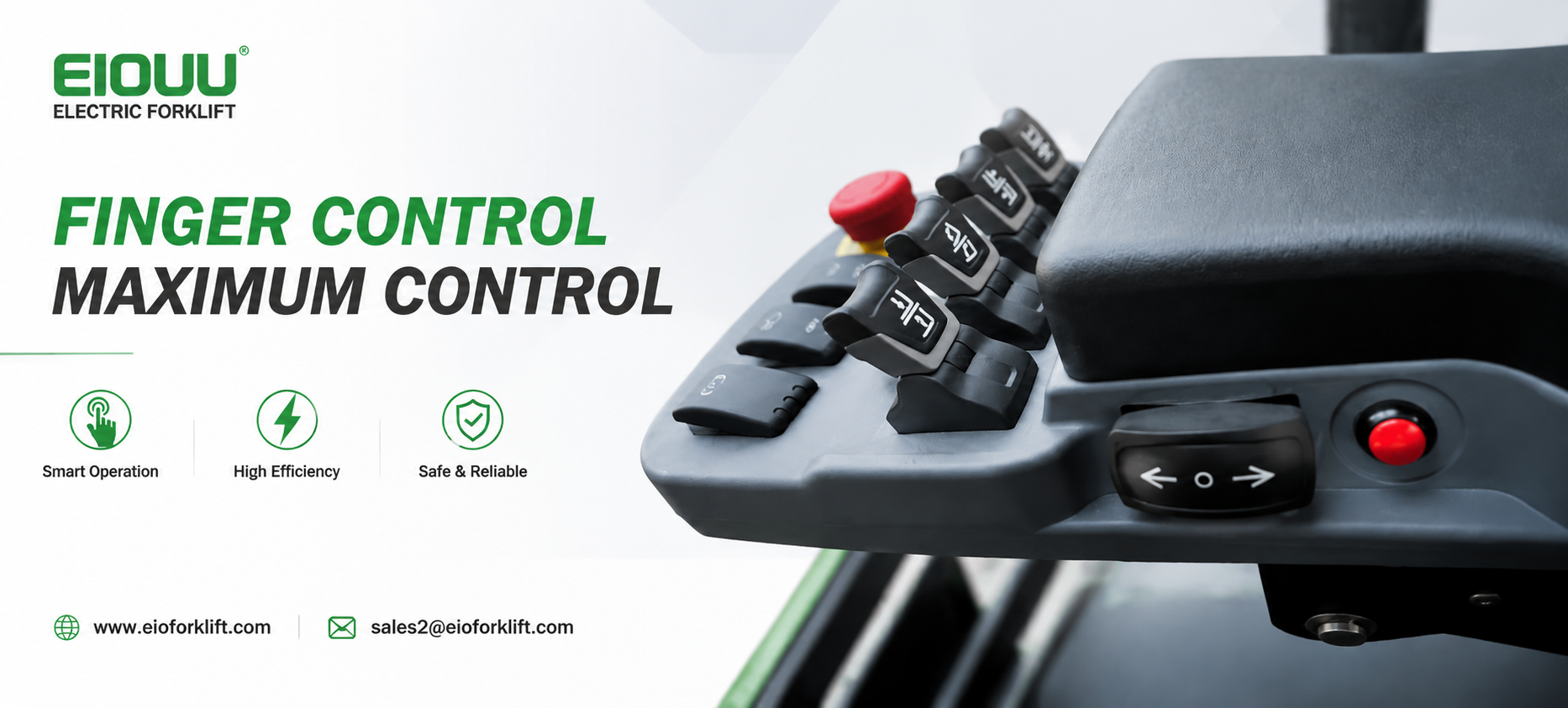
For repetitive material handling, fingertip controls can be useful.
They allow hydraulic functions to be operated with smaller finger movements instead of large mechanical lever movements.
This can make the control area feel cleaner and more convenient.
For distributors, fingertip controls can also help distinguish a higher-specification model from a basic forklift.
Customers can feel the difference immediately during a test drive.
Depending on the model, useful safety-related functions may include:
l Off-seat power protection
l Controlled cargo lowering
l LED lighting
l Clear instrument display
l Speed management
l Energy-recovery braking
l Rear axle damping
l Battery monitoring
Visibility through the mast also matters.
Heavy and bulky loads can already reduce the operator's view, so mast design should be part of the evaluation.
Electric forklifts reduce many engine-related maintenance requirements, but they still need service.
Check access to:
l Battery
l Controller
l Hydraulic system
l Brake components
l Electrical system
l Sensors
l Wheels
For fleet users, technician time matters.
For distributors, service access affects after-sales costs.
A machine that is easier to diagnose and repair is easier to support over several years.
Ask for a recommended spare-parts list with the first order.
Depending on the model, this can include:
l Sensors
l Switches
l Hydraulic seals
l Wheels
l Brake components
l Electrical parts
l Charger-related components
l Other service parts
You do not need to stock every possible component.
You do need a clear way to identify and order them.
Ask whether parts can be identified from the model and serial number several years later.
That is especially important for distributors.
For forklift dealers and importers, the 4 ton class can expand the customer base beyond standard warehouse users.
Potential buyers include:
l Machinery manufacturers
l Industrial warehouses
l Metalworking companies
l Paper businesses
l Building material suppliers
l Heavy logistics operations
For a distributor, 4 tons can act as the bridge between standard 3–3.5 ton forklifts and larger 5 ton industrial models.
That makes it a useful capacity to include in a broader electric forklift product range.
Depending on manufacturer capability and order requirements, OEM 4 ton electric forklifts can be configured for distributors.
Options may include:
l Private logo
l Custom colors
l Model labels
l Lithium battery configurations
l Mast options
l Fork dimensions
l Tires
l Side shift
l Clamp attachments
l Packaging
For long-term private-label projects, consistency matters.
If the distributor sells the same model for years, key components should remain identifiable and important changes should be communicated before production.
That makes spare-parts support much easier.
A useful inquiry might look like this:
Maximum load: 3,500 kg
Load size: 1,400 × 1,200 mm
Lift height: 4,500 mm
Daily use: 8 hours
Environment: Indoor warehouse + outdoor concrete
Battery: Lithium preferred
Attachment: Side shift
Quantity: 5 units
This gives the manufacturer enough information to recommend a real configuration.
Compare that with:
“Please quote 4 ton electric forklift, best price.”
The second message gets a quick answer.
The first gets a much better answer.
At EIOUU, we manufacture electric material handling equipment for international B2B customers, including forklift dealers, wholesalers, importers, warehouses and industrial buyers.
Our 4 ton electric forklift solutions are intended for heavier warehouse, manufacturing and industrial applications where buyers need greater capacity together with electric operation.
Depending on the model and project requirements, configurations can include options such as:
l Lithium battery
l Fingertip controls
l Different mast configurations
l Tire options
l Side shift
l Clamp attachments
l Intelligent BMS battery management
l Off-seat power protection
l One-piece cast steel axle
l Anti-leakage cylinder design
l Rear axle damping
l Energy-recovery braking
l OEM & ODM solutions
For distributors, private branding and market-specific product configurations can also be discussed according to quantity and technical requirements.
If you are deciding between a 3.5 ton, 4 ton or 5 ton electric forklift, send us the maximum load, dimensions, lift height, attachment and working environment.
Those details make the correct capacity much easier to determine.
A 4 ton electric forklift can be a very strong choice for heavy warehouse and industrial work.
But the 4,000 kg rating is only the beginning.
Check the real load.
Check the load center.
Look at residual capacity.
Choose the battery around the duty cycle.
Think about the attachment.
Measure the warehouse.
Look at the ground.
And ask about parts and service before the machine is shipped.
If your loads stay comfortably below 3 tons, a smaller truck may be more economical.
If a 3.5 ton forklift is regularly being pushed close to its limits, 4 tons may be the better long-term choice.
The correct forklift is not the one with the biggest number.
It is the one that gives enough capacity, enough working time and enough reliability without adding unnecessary cost or size.
A 4 ton electric forklift has a nominal rated capacity of 4,000 kg under specified conditions. Actual capacity can be affected by load center, lift height, mast configuration and attachments.
Yes. It can be suitable for heavier warehouse, manufacturing and logistics applications where the load and working environment match the forklift's specifications.
Choose 4 tons when loads regularly exceed the comfortable working range of a 3.5 ton model, or when attachments and higher lift requirements reduce available capacity.
Yes. Lithium battery configurations can be suitable for 4 ton forklifts, especially where frequent operation, fast charging and lower routine battery maintenance are important.
Depending on the model and environment, yes. Ground condition, weather exposure, slopes, tire choice and electrical protection should be considered.
Many suitable models can be configured with clamps and other attachments. Because attachments affect load center and residual capacity, the complete configuration should be checked before ordering.
It can be. If most loads are much lighter, a smaller 2.5, 3 or 3.5 ton forklift may be more economical and easier to maneuver.
Yes, depending on the manufacturer, model and project. OEM options can include private branding, colors, battery configurations, masts, forks, tires, attachments and packaging.
 Previous: None
4 Ton Electric Forklift Buying Guide for Warehouses and Distributors
Published on Oct. 31, 2026
3 Ton Electric Forklift Buying Guide for Heavy-Duty Warehouse Applications
Published on Oct. 22, 2026


314, Building 3, No. 12 Haitai Development 2nd Road, Binhai High-tech Zone, Xiqing District, Tianjin, China


Copyright © Tianjin HRX Technology Co., Ltd. All Rights Reserved. Sitemap
Home ProductsAbout usFor DistributorsOEM/ODMNewsContact Us