Pulished on Oct. 04, 2026
Selling another manufacturer's forklift is relatively straightforward.
You choose a model, agree on a price, import it and sell it to your customer.
Building your own forklift brand is different.
Once your name is on the mast, customers stop thinking about the factory that built the machine. To them, it is your forklift.
If the machine performs well, that strengthens your business. If a customer cannot get a replacement part six months later, that also comes back to your business.
This is why OEM electric forklifts should not be treated as standard forklifts with a different sticker.
For distributors, OEM can be a way to build a recognizable product range, protect margins and create repeat business. But it works best when branding, specifications, spare parts and after-sales service are planned together.
Here is a practical way to approach it.
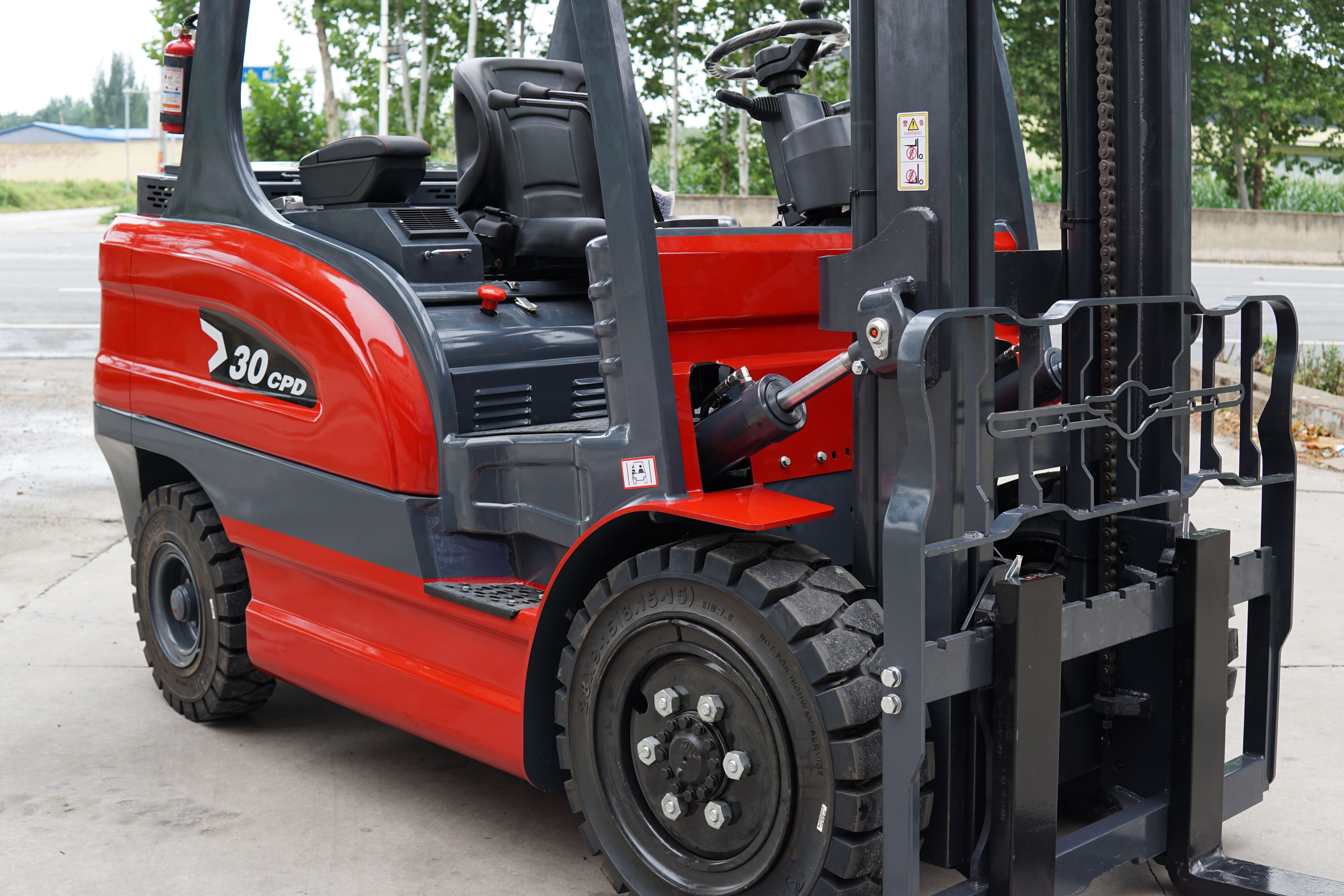
An OEM electric forklift is generally an existing forklift platform manufactured with agreed customization for a distributor, importer or private brand.
The level of customization varies.
At the simplest level, a manufacturer may place the distributor's logo on the forklift.
A more complete OEM project might include:
l Private brand logo
l Custom body color
l Model numbers
l Product labels
l Lithium battery options
l Mast configurations
l Fork dimensions
l Tires
l Attachments
l Operator controls
l Manuals
l Packaging
For most distributors, there is no need to design a completely new forklift.
The more practical approach is often to start with a proven platform and make the right changes for the local market.
Before choosing a logo position or paint color, answer a more important question:
Why should a customer buy your forklift instead of another one?
“Good quality and good price” is not enough.
Almost every forklift company says that.
Your position could be more specific.
For example, you might focus on:
Compact lithium electric forklifts for warehouses.
Or:
Reliable mid-range electric forklifts with strong local parts support.
Or:
Higher-specification electric forklifts for customers who want an alternative to premium European and Japanese brands.
The answer affects which machines you should OEM.
A distributor focused on price-sensitive customers needs a different product strategy from one selling higher-specification electric forklifts.
Start with the customer you want.
Then build the machine around that customer.
A factory catalogue can easily contain dozens of forklifts.
Your private-label catalogue does not need to.
For a new brand, a simple range is often easier to sell.
For example:
Model | Position | Typical Application |
1.6 Ton Electric Forklift | Compact | Small warehouses, light industry |
2.0 Ton Electric Forklift | General Purpose | Warehouses, factories, logistics |
2.5 Ton Electric Forklift | Mid-Capacity | Manufacturing, distribution |
3.0 Ton Electric Forklift | Heavy General Use | Industrial and heavier pallets |
3.5 Ton Electric Forklift | Higher Capacity | Manufacturing and specialized handling |
This already covers a large range of potential customers.
You can add other capacities later when actual sales justify them.
Every additional model means more specifications, spare parts, brochures, technician knowledge and inventory.
A bigger catalogue is not automatically a stronger brand.
One useful strategy for distributors is to offer two clearly defined product levels.
Not every customer buys for the same reason.
Some customers are very price-sensitive. They need a practical electric forklift for normal daily work.
Others are willing to spend more for better controls, improved operator comfort, stronger components, battery management or additional safety and convenience features.
Instead of trying to make one forklift satisfy both groups, consider a structure such as:
A straightforward electric forklift focused on essential functions, competitive cost and general material handling.
A higher-specification forklift with upgraded components, improved controls, additional operator features and configurations intended for more demanding use.
The important word here is clear.
If you charge more for the premium model, the customer should be able to understand what is different.
Do not create a “premium” forklift by changing the paint and adding another badge.
Once the product strategy is clear, branding becomes important.
Your forklifts should look as though they belong to the same family.
Choose consistent:
l Logo position
l Logo size
l Body colors
l Mast branding
l Model-number format
l Warning-label style
l Product photography
l Brochure design
If the 2 ton model has a large logo on the mast but the 3 ton model has a completely different logo on the counterweight, the range starts to look like products collected from different suppliers.
Customers notice consistency, even when they cannot explain why.
It makes a brand feel established.
Send finalized artwork and branding rules to your OEM maker before production.
Do not rely on chat screenshots as references.
Model names are easy to overlook.
They become important once customers start requesting parts.
Suppose you sell a 2 ton forklift today and another version two years later.
If both are simply called “2T Electric Forklift,” your technicians may have difficulty identifying the exact configuration.
A simple model system helps.
It could identify capacity, product family or generation.
The exact naming convention is less important than using it consistently.
Keep an internal record linking your model number to the manufacturer's production configuration.
That becomes extremely useful later.
Battery options can quickly become complicated.
One customer asks for a larger battery. Another wants lead-acid. A third wants a different lithium configuration.
If every forklift is different, supporting the installed fleet becomes harder.
For your main OEM models, consider defining a standard battery configuration.
Then offer one or two alternatives where there is a genuine customer need.
Lithium batteries are particularly attractive for many modern electric forklift applications because of fast charging, opportunity charging and reduced routine battery maintenance.
But battery selection should still follow the duty cycle.
A forklift working three hours per day does not need the same configuration as one working across two shifts.
For lithium systems, also keep records of the battery, BMS and charger used for each model.
Distributors often spend a lot of time comparing motors and battery capacities.
The operator experiences the forklift differently.
They notice the seat.
They notice visibility.
They notice vibration.
They notice whether the controls are easy to reach.
They notice how smoothly the truck starts, brakes, lifts and lowers.
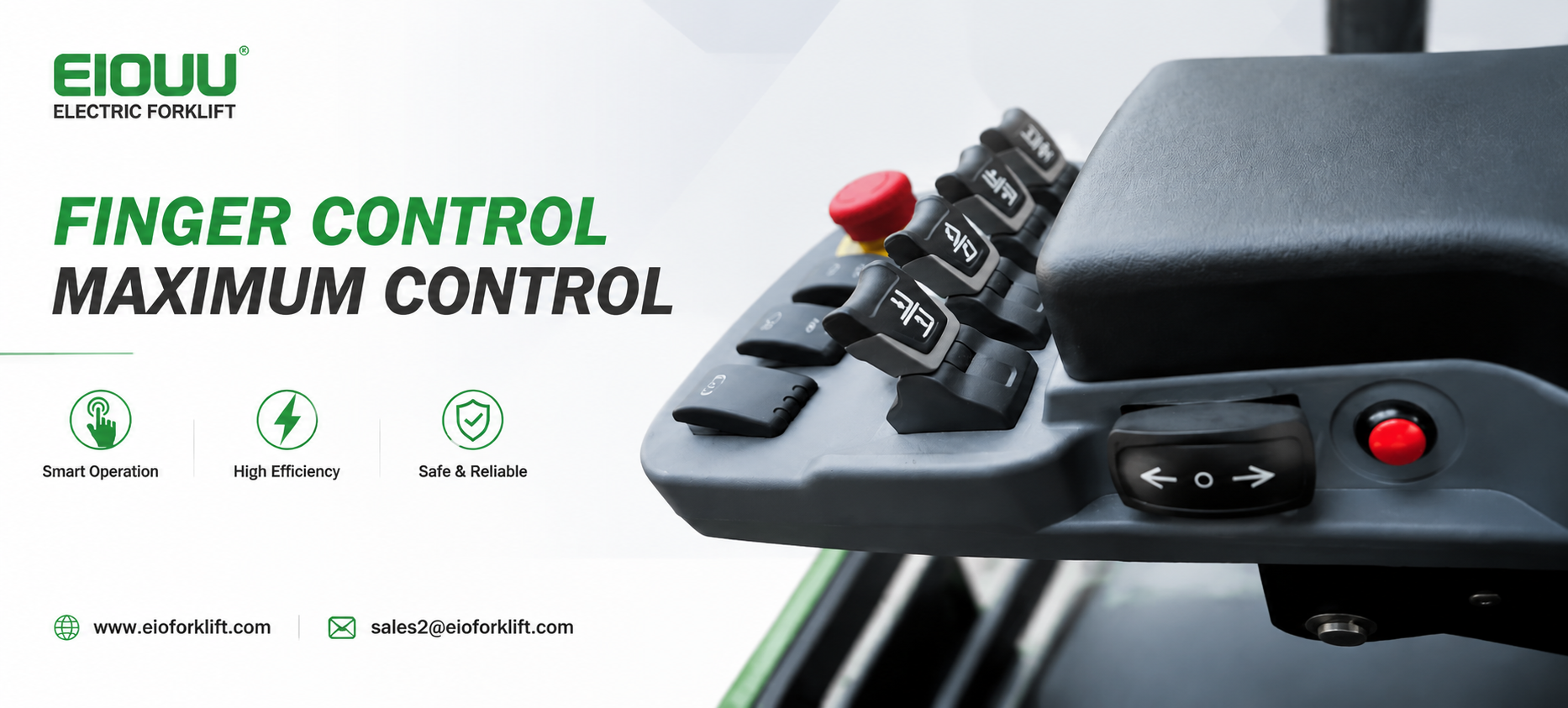
Fingertip hydraulic controls help tell higher-spec electric forklifts apart from basic models, especially for repetitive warehouse tasks.
Other optional extras vary by model: smart dash displays, rear axle shock absorption, LED lights, controlled load descent and operator safety sensors.
These are useful selling points because customers can actually experience them.
A feature is easier to sell when the operator understands its benefit within five minutes of driving the machine.
A polished counterweight helps sell the forklift.
It does not keep the machine working.
For lasting brand credibility, focus on the mechanical and electrical systems hidden inside the machine.
The included parts vary by forklift platform: axle build, mast structure, hydraulic cylinders, wiring, controllers, connectors and battery management.
At EIOUU, for example, selected electric forklift configurations pay attention to features such as a one-piece cast steel axle, anti-leakage cylinder design, protected wiring, rear axle damping and intelligent BMS battery management.
For a distributor building a brand, these details matter because customers may keep the machine for years.
The first impression sells the forklift.
The next few years determine whether they buy another one.
This ranks among the most critical elements of OEM forklift operations.
Don’t wait until the first machine failure to plan for spare parts.
Before you ship out your first unit, get a recommended spare parts list from the manufacturer.
Identify the components that your local technicians are likely to need.
Depending on the model, that may include:
l Sensors
l Switches
l Hydraulic seals
l Wheels and tires
l Brake components
l Electrical components
l Charger parts
l Controller-related components
l Mast wear parts
You do not need a warehouse full of every component.
A small stock of common parts can make a major difference to customer service.
More importantly, establish a reliable parts-identification process.
If a customer calls three years later, your team should be able to identify the correct component from the model and serial information.
When you sell a private-label forklift, the customer does not want to hear:
“We need to ask the factory in China.”
They bought the forklift from you.
This does not mean your technicians must know every answer immediately.
It means you need a system.
Your OEM manufacturer should be able to support your technicians with fault diagnosis, parts identification, wiring information and replacement components.
Before choosing a long-term manufacturer, test this.
Ask technical questions during the trial stage.
See how specific the answers are.
See how quickly the supplier identifies a component from a photograph.
The sales department may win the first order.
Technical support helps win the second.
Do not try to perfect your entire private-label range on a spreadsheet.
Order a sample or a small first batch.
Then inspect it.
Have your technicians look at it.
Drive it with a load.
Let a trusted customer test it if appropriate.
You may discover that the logo should be smaller.
The battery specification may need changing.
Perhaps the standard fork length does not match what customers normally use.
Maybe the control layout is exactly what operators like.
This feedback is valuable.
Make the changes before increasing the volume.
An OEM product should improve from real use, not just from catalogue comparison.
Once you are satisfied with the trial model, create an approved specification.
Record:
l Capacity
l Load center
l Mast
l Lift height
l Battery
l Charger
l Drive system
l Fork dimensions
l Tires
l Main electrical components
l Controls
l Attachments
l Color
l Branding
l Labels
l Included accessories
This becomes your reference for repeat orders.
If an important component needs to change later, discuss it before production.
This is especially important for spare-parts compatibility.
A private-label forklift brand becomes difficult to support when every shipment contains different components under the same model number.
Imagine a customer buys two of your 2.5 ton electric forklifts.
Eighteen months later, they order another three.
They expect those forklifts to feel familiar.
The controls should be in the same place.
The parts should be identifiable.
The battery and charger arrangement should not be a surprise.
The model should still look like part of the same product family.
This consistency is one of the reasons established forklift brands are easier for dealers to support.
An OEM distributor needs to create the same discipline with its manufacturing partner.
If you sell exactly the same unbranded forklift as ten other importers, customers can compare prices very easily.
They search the model online and ask:
“Why is yours €500 more?”
A private-label range changes the conversation.
You are no longer selling only the machine.
You are selling:
your specification + local stock + warranty + parts + technical support + customer relationship.
That gives the distributor more room to compete on value rather than only on the lowest price.
OEM does not automatically create higher margins.
The margin comes from building something customers consider worth paying for.
A good brand needs a simple explanation.
Your salesperson should be able to explain the product in thirty seconds.
For example:
“This is our compact lithium electric forklift range for warehouse and factory applications. We selected the battery, controls and main components around the needs of our local customers, and we stock the common service parts here.”
That is stronger than:
“This is a forklift we import from China.”
The machine may still be manufactured in China.
The difference is that the distributor has taken responsibility for the specification and customer experience.
That is what turns OEM sourcing into a brand.
Once your own product range is established, create original marketing material.
Do not depend entirely on factory catalogue images.
Take photographs of your actual machines.
Create your own product pages.
Show the controls, battery, mast and details.
Make videos of forklifts working with real loads.
Publish maintenance information.
Explain how customers should choose capacity and battery configuration.
This also helps with Google SEO.
Instead of having the same product description as several other distributors, your website develops its own useful content around the machines you sell.
Over time, that content can bring customers directly to your brand.
Private labeling does not need to mean pretending the machine was manufactured somewhere else.
Many European companies successfully source industrial products globally.
What matters is what the distributor contributes.
You selected the platform.
You defined the specification.
You manage local inventory.
You provide the warranty.
You stock parts.
You support the customer.
Being transparent about the supply chain while demonstrating strong local support can build more trust than trying to make the origin unclear.
The final question is not:
“Can this factory put my logo on a forklift?”
Most manufacturers can.
The better question is:
“Can I build a five-year product range with this manufacturer?”
Think about what happens when you have 100 or 500 machines operating in your market.
Will spare parts still be available?
Can the supplier identify old configurations?
Will quality remain consistent?
Can it support new models as your business grows?
Will it tell you before changing an important component?
Can your technicians get useful technical information?
Those questions become more important with every forklift you sell.
At EIOUU, we work with international B2B customers including forklift distributors, wholesalers and importers looking for electric material handling solutions.
OEM cooperation can start with existing electric forklift platforms and develop around the requirements of the distributor's market.
Depending on the model, quantity and project, customization can include areas such as:
l Private branding
l Product colors
l Model identification
l Lithium battery configurations
l Mast options
l Fork dimensions
l Tires
l Attachments
l Operator controls
l Product labels
l Packaging
For distributors interested in different market positions, suitable standard and higher-specification configurations can also be discussed according to the application.
Our approach is not limited to putting your logo on our forklift.
For a long-term distributor project, product consistency, parts identification, technical communication and repeat-order support are just as important.
The goal is to help distributors develop an electric forklift range they can sell under their own identity and continue supporting after the machines enter the market.
OEM gives forklift distributors an opportunity that simple importing does not.
It allows you to stop competing only on somebody else's model and start building a product around your own customers.
But the logo is the easy part.
The real brand is built through consistent specifications, reliable machines, available spare parts, good local service and the experience customers have after the sale.
Start with a few models.
Choose the right configuration.
Test them.
Listen to operators and technicians.
Keep the specification consistent.
Then grow the range when the market gives you a reason to.
A forklift can leave the factory with your logo in a few weeks.
Building a brand that customers ask for by name takes longer.
That is exactly why it has value.
An OEM electric forklift is generally an existing forklift platform manufactured with agreed customization for a distributor or private brand. This can include logos, colors, model labels, battery options, masts, forks, tires, attachments and other specifications.
Yes. Distributors can work with an OEM manufacturer to develop a private-label product range. Building a successful brand also requires consistent specifications, local marketing, spare-parts availability and after-sales support.
No. Logo customization is the simplest form of OEM. A more complete OEM program can include product configuration, batteries, masts, forks, tires, attachments, controls, labeling, packaging and other market-specific requirements.
There is no fixed number. For a new private-label range, starting with a small number of capacities that match local demand is often easier to manage than launching a very large catalogue.
Yes, depending on the forklift platform and application. Distributors should select lithium battery capacity according to working hours and charging requirements and should also consider BMS, charger compatibility, warranty and replacement availability.
Very important. Once a distributor sells forklifts under its own brand, customers expect that distributor to provide service and parts. Spare-parts planning should therefore begin before the first machines are sold.
EIOUU supports OEM & ODM discussions for international B2B customers. Available options depend on the model, quantity and technical requirements and can include private branding and selected product configurations.
 Previous: None
OEM Electric Forklifts: How Distributors Can Build Their Own Brand
Published on Oct. 04, 2026
How to Choose an Electric Stacker for Your Warehouse
Published on Oct. 01, 2026


314, Building 3, No. 12 Haitai Development 2nd Road, Binhai High-tech Zone, Xiqing District, Tianjin, China


Copyright © Tianjin HRX Technology Co., Ltd. All Rights Reserved. Sitemap
Home ProductsAbout usOEM/ODMNewsContact Us